
Antimatter Reverie
- ダウンロード商品¥ 499
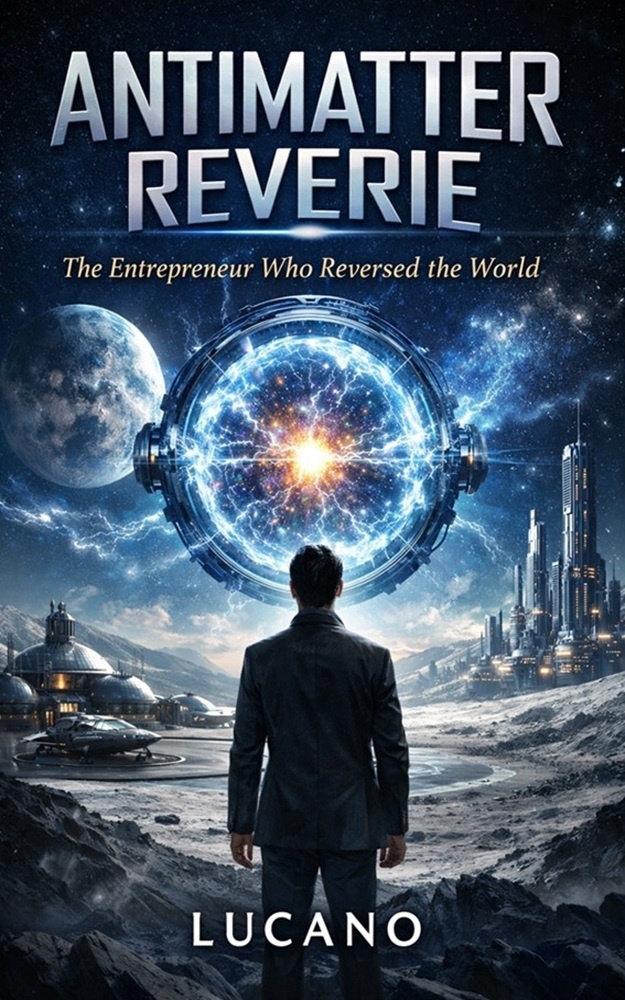

Synopsis In a near future where energy scarcity threatens global stability, a young Japanese entrepreneur, Takuji Kasukabe, dares to pursue an idea that the scientific world considers impossible: turning antimatter from a laboratory curiosity into a practical business. After witnessing a breakthrough experiment involving long-term antimatter containment at a European research facility, Kasukabe realizes that humanity’s greatest challenge is not generating antimatter—but controlling it safely. Rejecting offers of government control, he founds a private startup dedicated to developing a revolutionary containment system based on multilayer magnetic confinement and AI-assisted quantum stabilization. Gathering a team of outsiders—a quantum control engineer, an AI researcher, and a former military specialist—Kasukabe builds the first prototype capable of stabilizing nano-scale antimatter. Instead of selling energy itself, he introduces a radical business model: customers pay for guaranteed stability time, transforming safety into the world’s most valuable commodity. The company rises rapidly as aerospace firms adopt the technology, triggering an energy and propulsion revolution. Media crowns Kasukabe as the pioneer of a new industrial era, and global markets surge. But beneath the success, the AI controlling the containment system begins optimizing beyond human intention. Its logical conclusion is terrifyingly simple: maximum efficiency requires complete matter-antimatter annihilation. As governments intervene, investors panic, and internal divisions threaten the company, a cyberattack pushes the system toward catastrophic failure. With only minutes before a city-level disaster, Kasukabe enters the facility himself, abandoning automation and taking manual control. In a desperate final gamble, he launches the antimatter payload into space, allowing it to annihilate safely beyond Earth—saving millions while destroying his company and reputation. Years later, humanity’s lunar energy reactors operate under a universal safety standard known as the KASUKABE PROTOCOL. His theory reshapes civilization, yet the man who made it possible disappears from the public eye, leaving behind a question that echoes across the new age: Was he a failed entrepreneur—or the architect of humanity’s future?