
限定製作ミニチュア複製原画「憧憬 -われは海の子- 戦艦 長門 2588」
- Ships within 5 daysOut of StockPhysical (direct)3,850 JPY
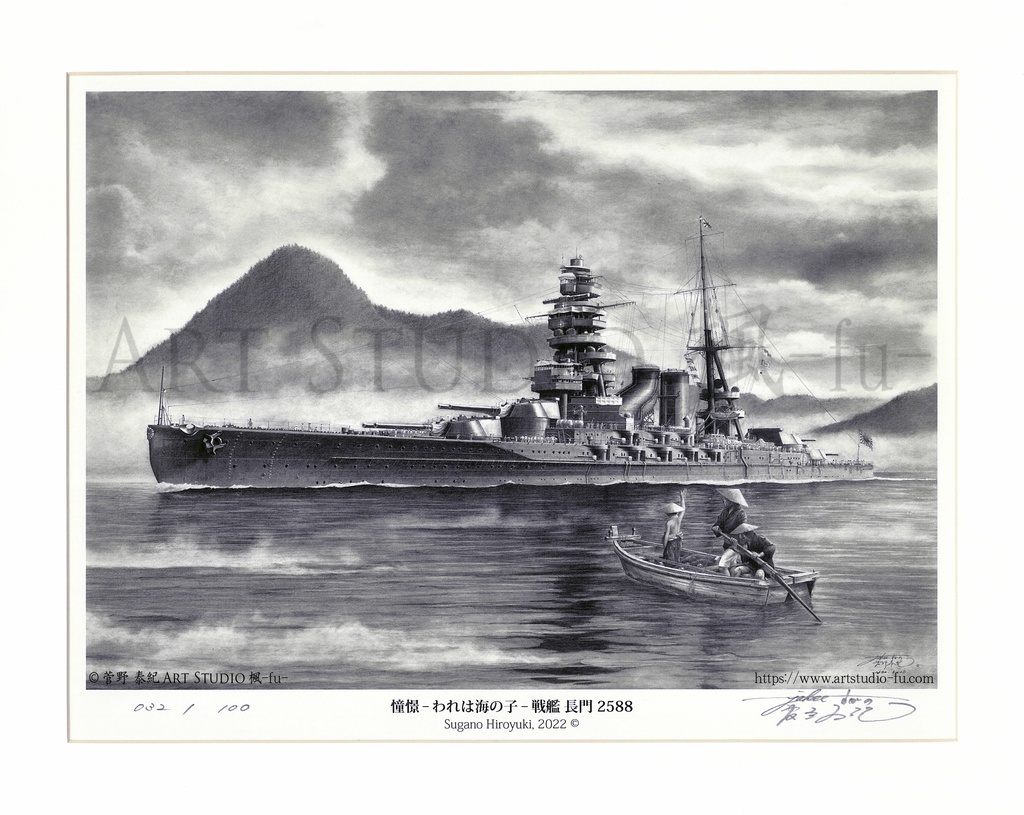
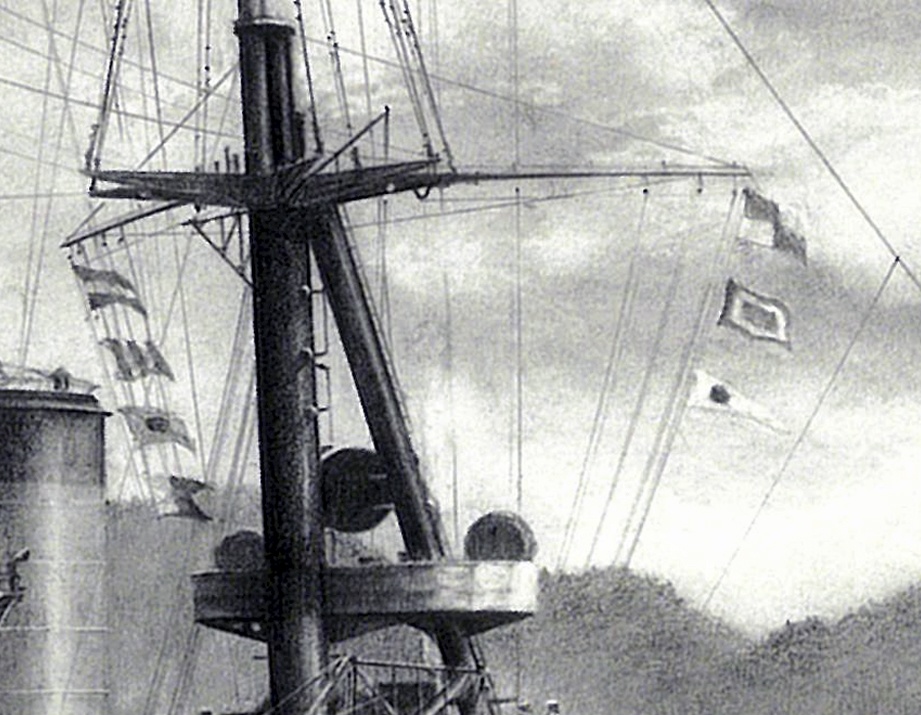


【100枚限定ジークレー版複製原画】 従来のレプリカ画から大幅にクオリティを向上!従来のレプリカ画は、網点で構成される印刷でしたが、この度よりジークレー(デジタルリトグラフ)版のミニチュア複製原画(100枚限定)として新たに販売開始しました。熟練の専属職人の手で仕上げられた複製画は、ミニチュアながら極めて原画に忠実に細部を再現しています。外寸サイズはコレクションしやすい八つ切り(303㎜×242㎜)。 エディションナンバーと作家直筆サイン入り! A significant improvement in quality from our previous reproductions! The conventional reproductions were printed with reticulated dots, but now they are available in a new giclee (digital lithograph) version as miniature original reproductions (limited to 100 pieces). The miniature reproductions, hand-finished by skilled and exclusive artisans, are extremely faithful in detail to the originals. The outer size is an octavo (303 mm x 242 mm) for easy collection. The item will have an edition number and will be autographed by the artist!
【作品解説 / Description of the work】
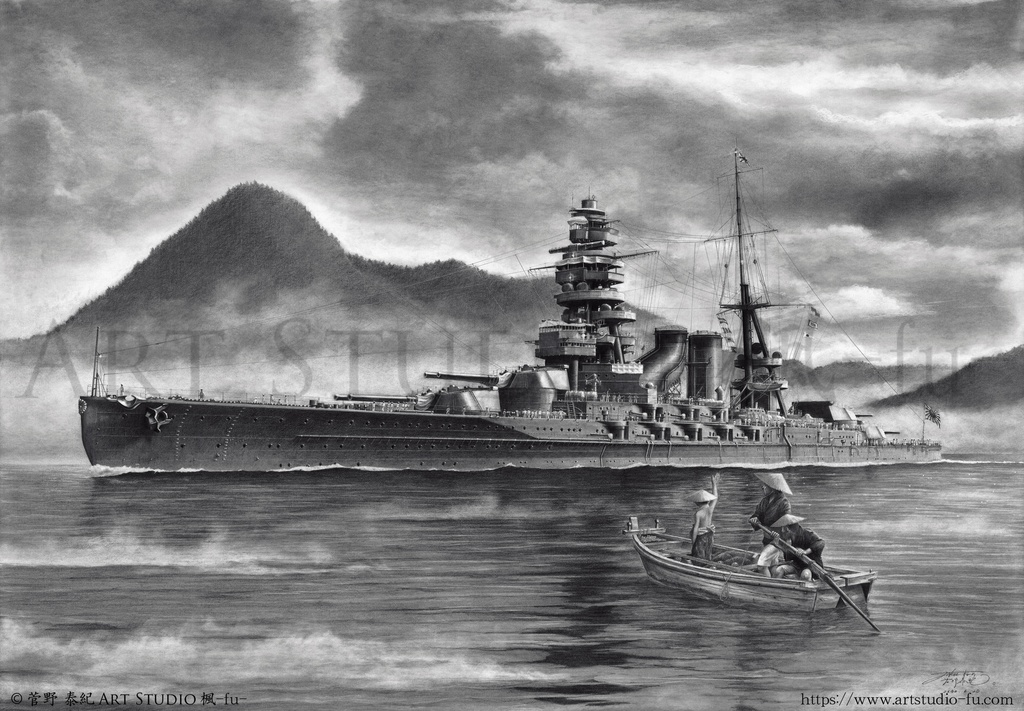
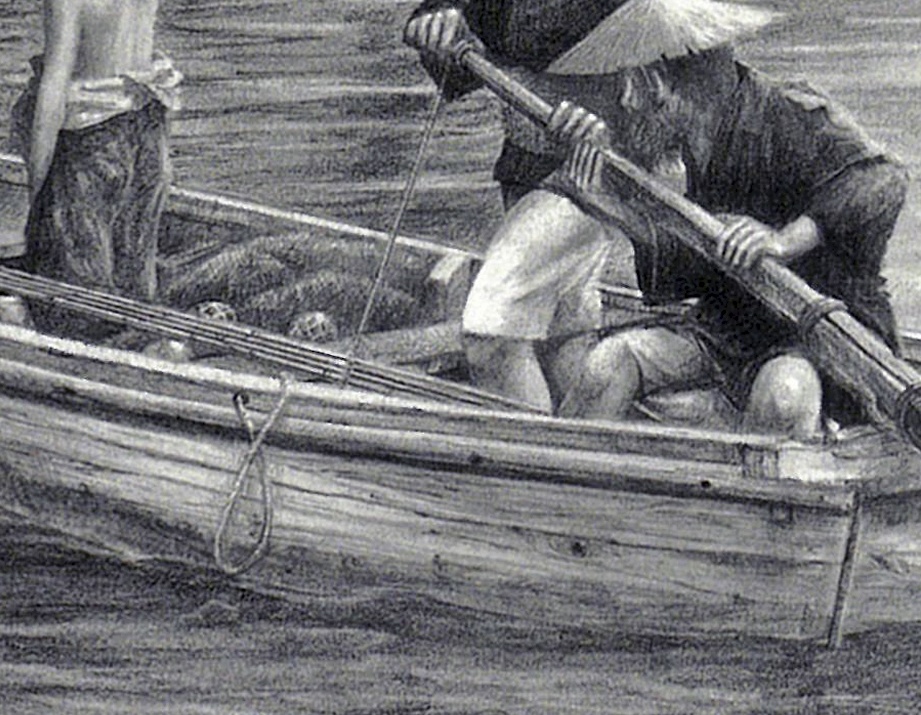
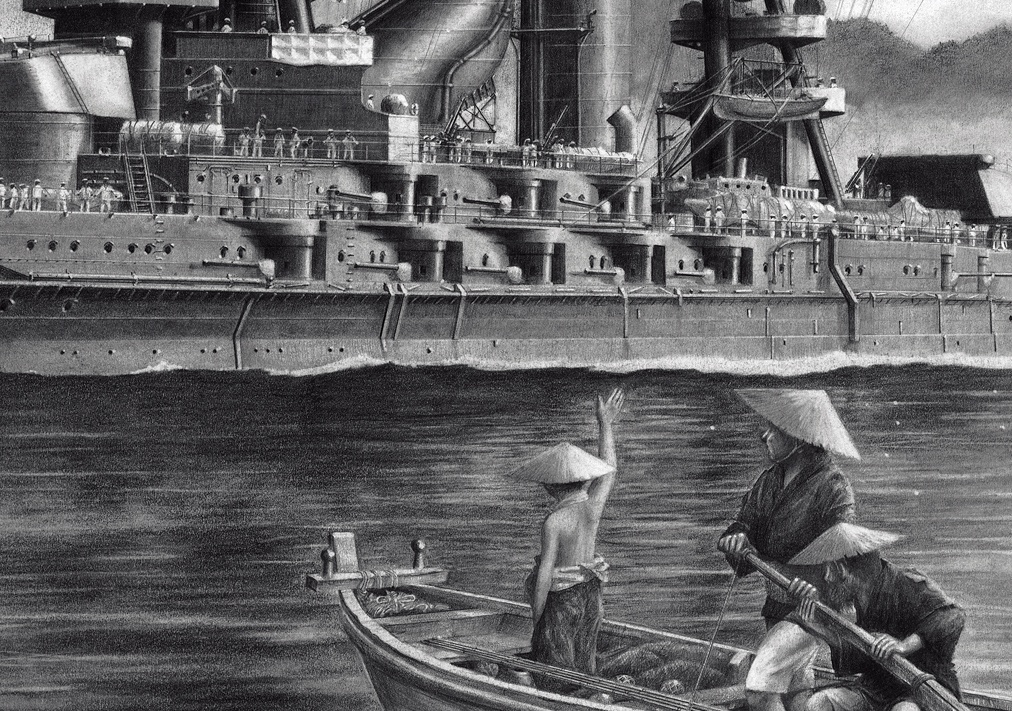
鉛筆画『憧憬 -われは海の子- 戦艦 長門 2588』”Yearning, I Am a Child of the Sea, Battleship Nagato 2588” 戦艦「長門」は、世界7大戦艦(いわゆる「ビッグ7」)の筆頭格として数えられ、ワシントン海軍軍縮条約のきっかけともなった、帝国海軍の象徴的な戦艦です。大正9年(1920年)に完成した当時、世界で初めてかつ最大口径となる41cm主砲を搭載し、当時の戦艦としては非常に高速な26.5ノット(公試26.443ノット)の機動力を誇る高速戦艦でした。その竣工は、列強諸国に大きな衝撃を与えました。大東亜戦争中、大和型戦艦の存在が極秘とされていたため、戦前から戦中にかけては「長門」と「陸奥」の2隻が、帝国海軍を象徴する大戦艦として国民に広く親しまれました。運用中に、排煙が艦橋側へ流れ込む問題が発覚したため、就役後しばらくして煙突の改装が行われ、前部煙突が後方へ大きく屈曲した独特な姿となりました。この特徴的なシルエットが、「長門」と「陸奥」を一目で認識できるものとして、広く知られるようになりました。特に当時の男子にとって、海軍に入りこのような大戦艦に乗艦することは、大きな憧れであり、名誉でもありました。そうした心情は、唱歌「われは海の子」を7番まで通して聴けば、よく理解できるでしょう。本作品は、呉軍港を離れ、海霧が晴れゆく大須瀬戸を出航していく戦艦「長門」を、地元の漁師一家が見送るシーンを描いたものです。安芸小富士を背に悠然と進む「長門」を眺めながら、櫓を漕ぐ父親と祖父を背に手を振る幼い弟。その視線の先では、水兵として艦に乗り組んだ兄が、甲板上で必死に帽子を振っています。やがてこの弟も、兄の背中を追いかけて海軍に入隊する日が来るのでしょうか。 海に生きる一家の行く末に、ぜひ思いを馳せてみてください。 The battleship Nagato was counted among the world's seven great battleships (the so-called "Big Seven") and stands as an iconic symbol of the Imperial Japanese Navy, even serving as one of the catalysts for the Washington Naval Treaty. When completed in 1920 (Taisho 9), she was the world's first battleship to mount 41 cm (16.1-inch) main guns—the largest caliber at the time—and achieved a remarkable top speed of 26.5 knots (trial speed 26.443 knots) for a battleship of her era, making her a true high-speed battleship. Her commissioning sent shockwaves through the major naval powers. During the Greater East Asia War, because the existence of the Yamato-class battleships was kept strictly secret, Nagato and her sister ship Mutsu were regarded throughout the prewar and wartime periods as the representative capital ships of the Imperial Japanese Navy and were beloved by the Japanese people. Shortly after entering service, an issue arose in which smoke from the funnels drifted toward the bridge. To address this, the funnels were modified not long afterward, with the forward funnel bent sharply backward—a distinctive silhouette that became instantly recognizable and widely associated with Nagato and Mutsu. For boys of that generation, enlisting in the navy and serving aboard such a mighty battleship was a tremendous dream and a great honor. You can sense this sentiment clearly by listening to all seven verses of the children's song "Ware wa Umi no Ko" ("I Am a Child of the Sea"). This artwork depicts the scene of the battleship Nagato departing from Kure Naval Base and sailing out through the Great Suse Seto (Osu Seaway) as the sea mist gradually clears, watched by a local fishing family.With Mount Aki-no-Kofuji in the background, Nagato glides majestically forward. In the foreground, a young boy waves his hand while standing behind his father and grandfather, who are rowing their boat. The boy's gaze is fixed on his older brother, a sailor aboard the ship, who is waving his cap frantically from the deck.Will this younger brother one day follow in his elder sibling's footsteps and join the navy himself? Please take a moment to reflect on the future of this family whose lives are bound to the sea.