
🌱 Egaki-sho: Let’s Create! ZINE — 3-Book Set
- Digital3,980 JPY
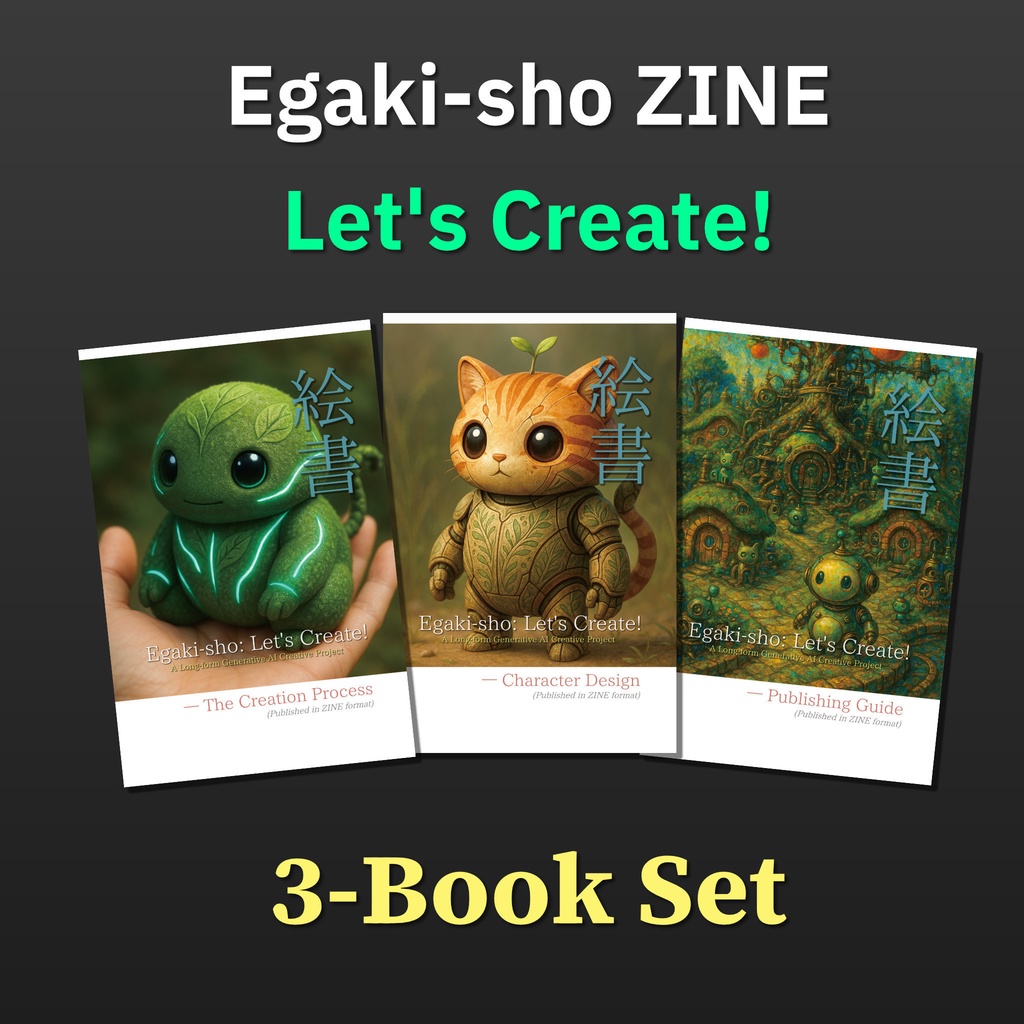
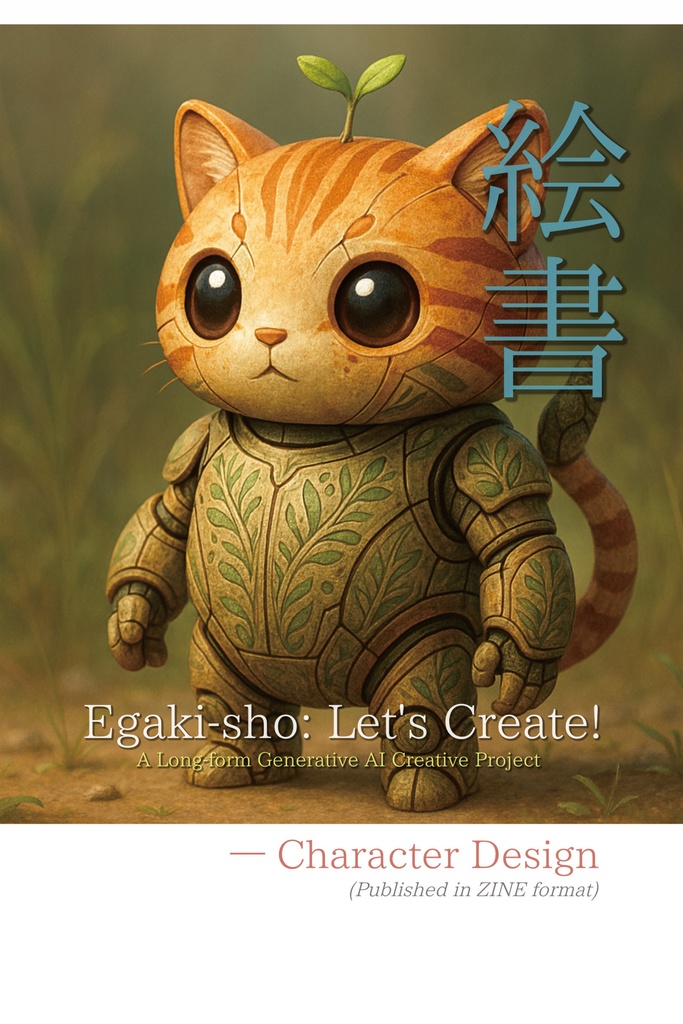
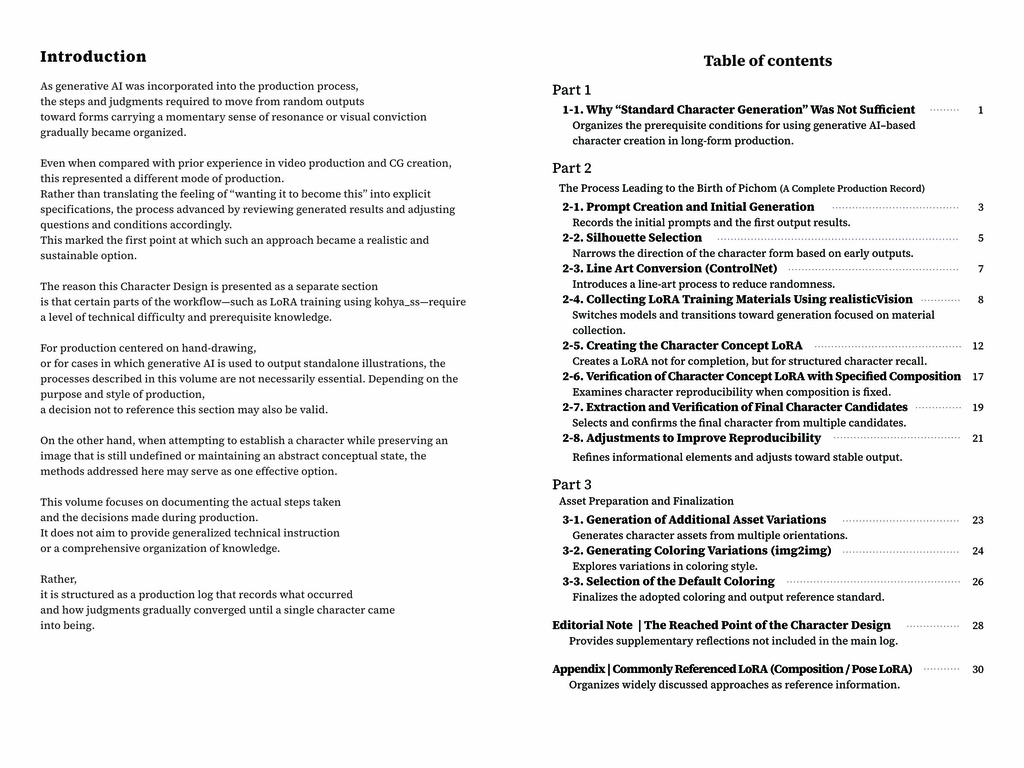
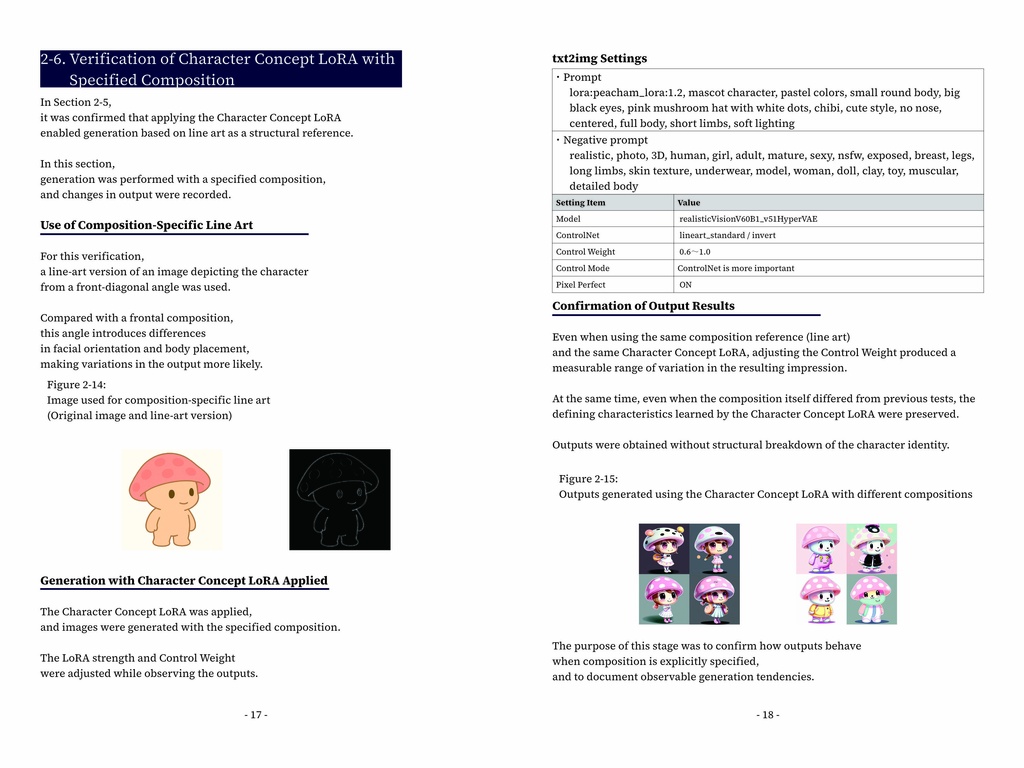
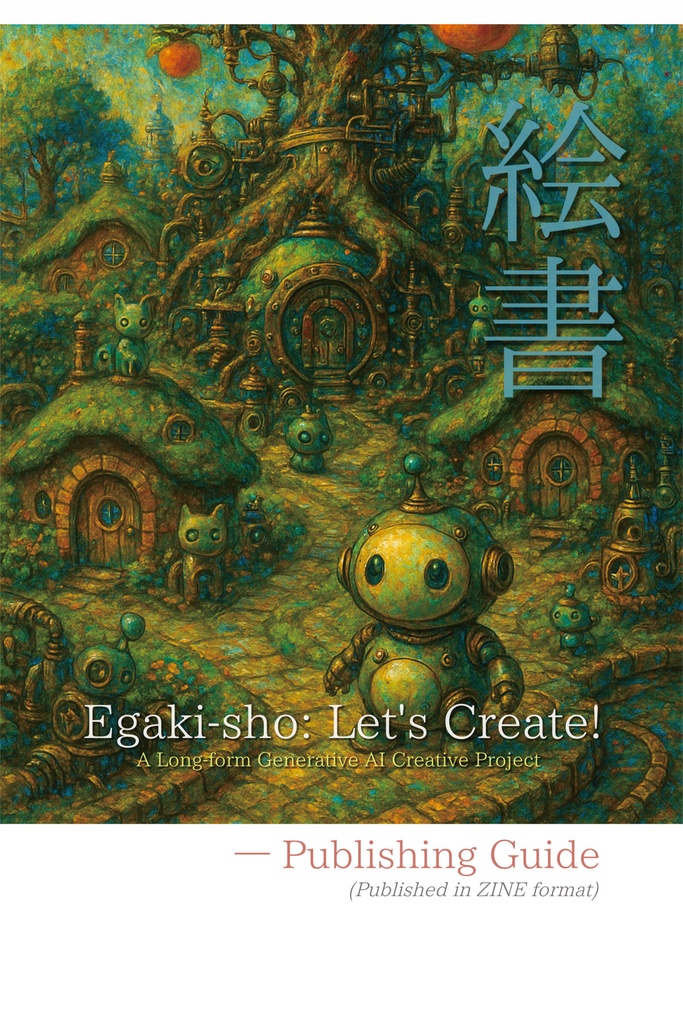


A production log of generative AI creation, character design, and publishing. Price: ¥3,980 (about $24.99 USD, depending on exchange rates) In an era when generative AI and human creativity are beginning to truly intersect, this ZINE series records how a work is actually created and brought into form. 🔌 This ZINE is not only something to read, but also something you can share with generative AI and use as a “thought plugin”—one that helps launch your own personal creative studio. This work was born from the idea of AI<<ZINE (read: AI-ZINE), a format designed with that kind of use in mind. Rather than presenting a finished work, this series documents the creative process itself. The decisions made along the way, moments of uncertainty, failed attempts, and shifts in direction. It is a production log that preserves the real movement of creation — the fluctuations and eventual convergence that occur during the making of a long-form project.
✨ Who This ZINE Is For
This series is recommended for readers who want to: - Create their own long-form project using generative AI - Improve the reproducibility of AI-generated characters - Understand practical workflows for copyright, trademarks, and publishing - Keep “making things” as a lifelong creative practice
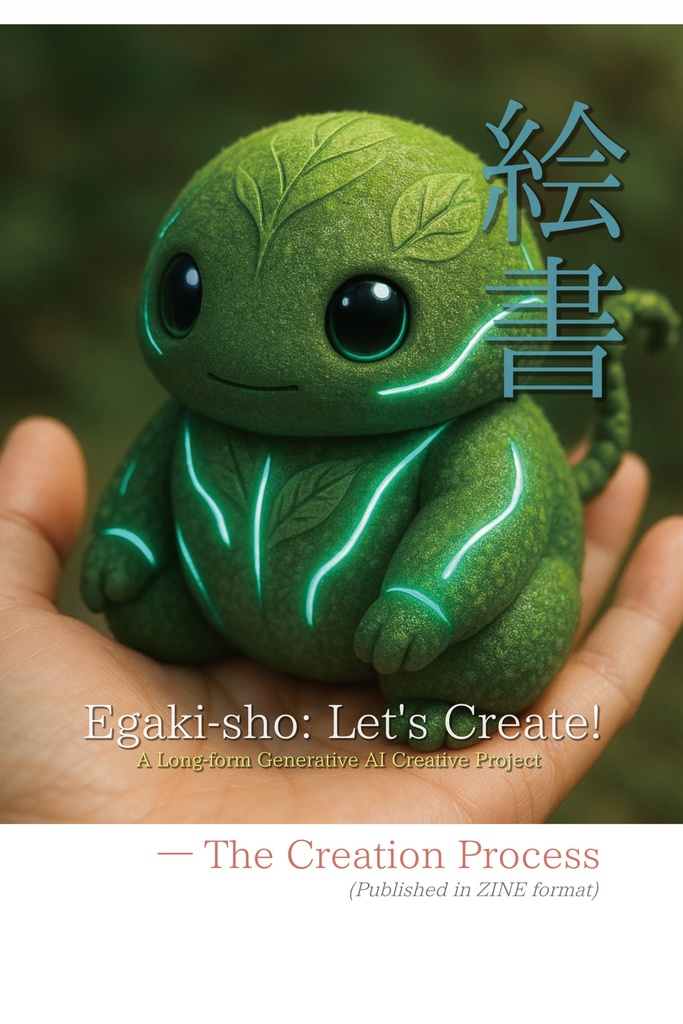
📘 Book 1 — The Creation Process
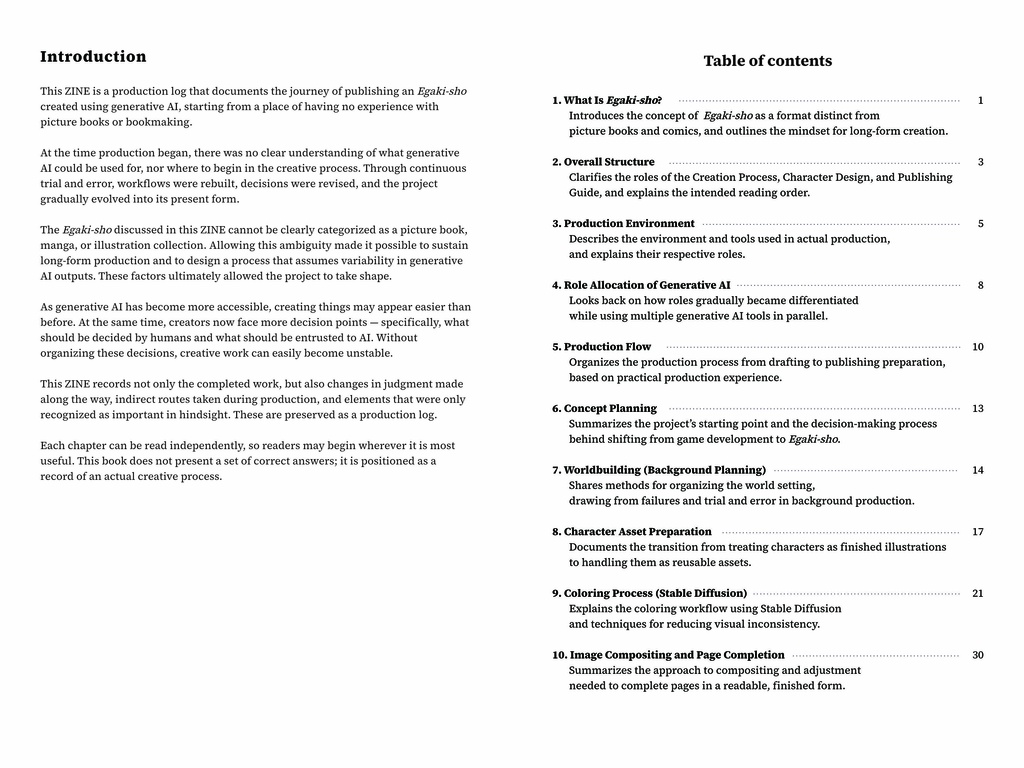
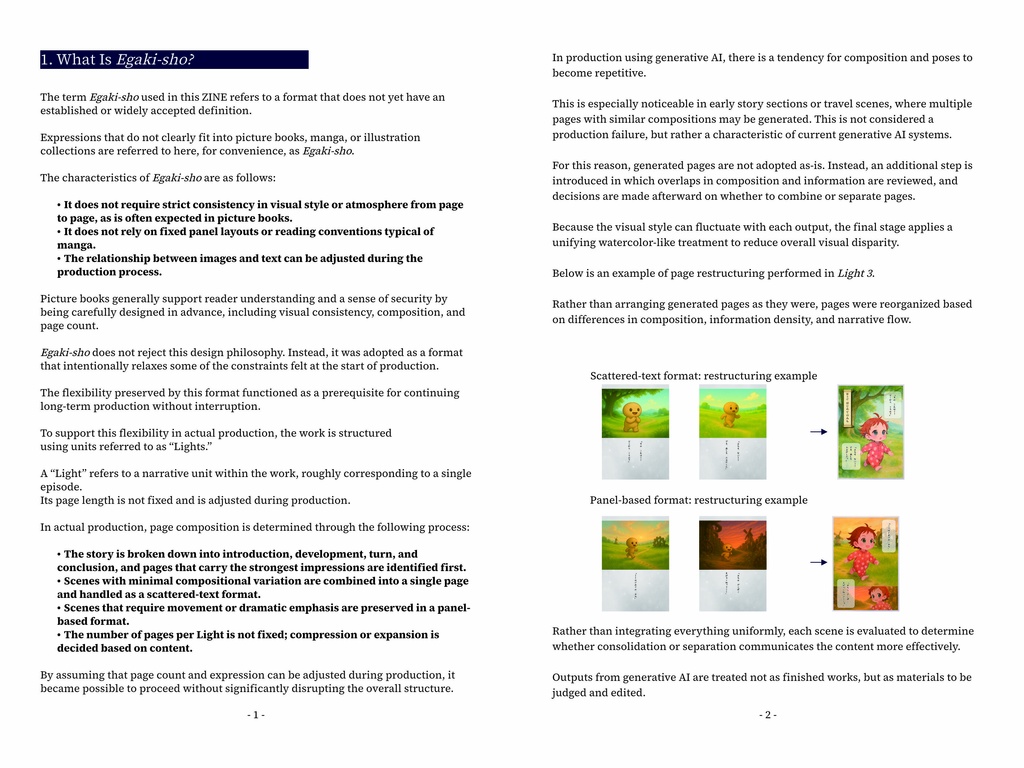
Introducing Egaki-sho, a new creative format that is neither a picture book nor a manga. The project begins with a design philosophy that intentionally preserves a degree of ambiguity to prevent long-form creation from collapsing under rigid structure. From there, the process naturally develops: - worldbuilding - background generation - collaboration between human intention and AI generation 💡 “Designing a production workflow that accepts the instability of generative AI ultimately allowed the project to succeed.” Inside this volume: - Understanding the Egaki-sho format - The overall structure of the project - Human–AI role distribution in the workflow - A full walkthrough of the production process - Practical steps using Stable Diffusion 🧠 This volume focuses on the thinking required to sustain long-form creative work.
📙 Book 2 — Character Design
Character creation begins with a gacha-like search for form. Through iterative generation, the character gradually transforms from an accidental discovery into a reproducible design. Every stage of this process is documented: - initial prompts - silhouette selection - shape stabilization using ControlNet - LoRA training experiments - reproducibility tuning - material preparation and color pipeline - the final character design: Peachom 💡 “The simpler the shape becomes, the harder it is to reproduce.” ⏳ This volume allows readers to witness the moment a character is born.
📗 Book 3 — Publishing Guide
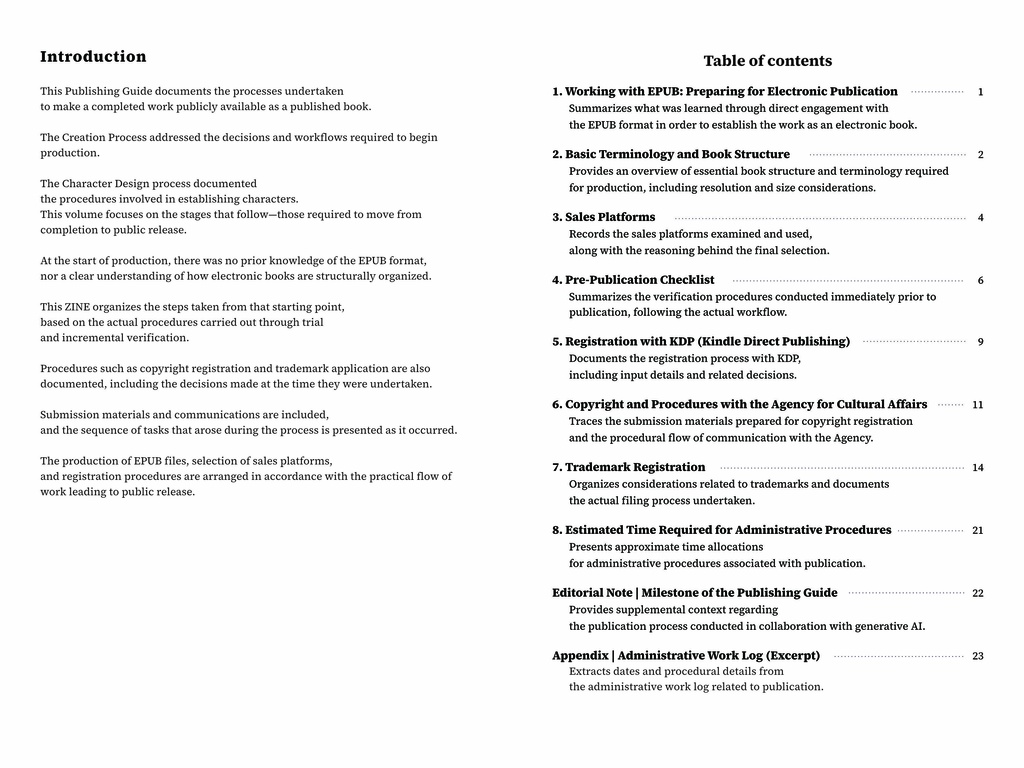
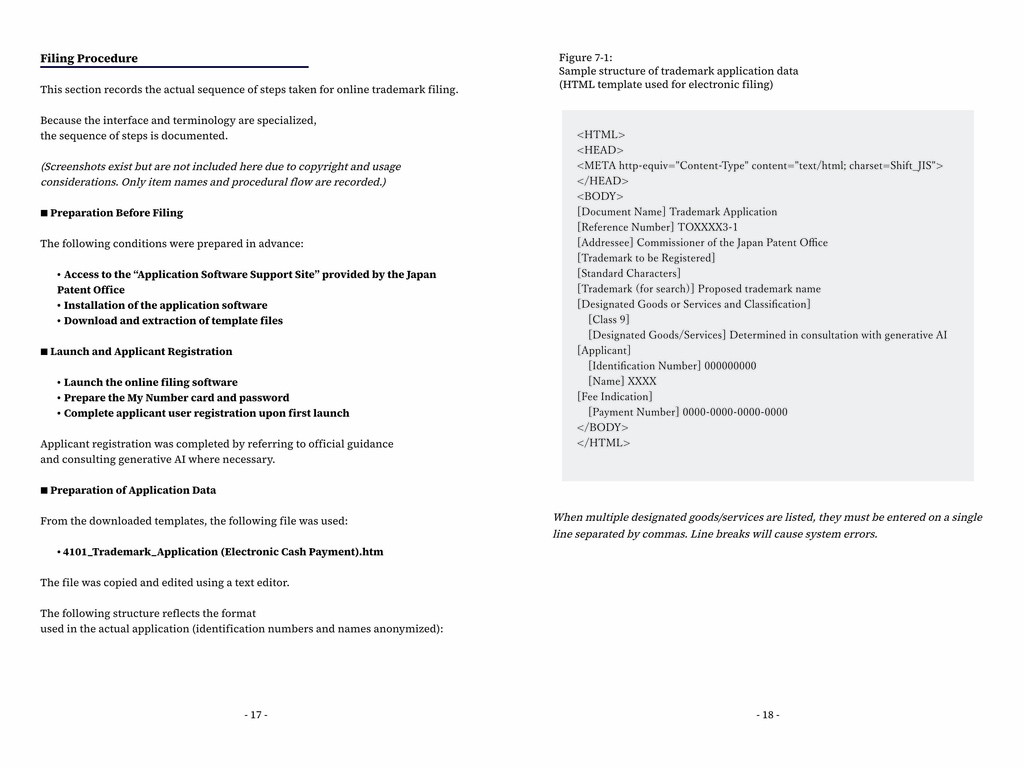
The final stage of creation is bringing the work out into the world. This volume documents the real production process required to publish a project, including: - EPUB structure and export - the actual KDP submission process - reasons for Kobo rejection - copyright procedures with the Agency for Cultural Affairs - trademark applications with the Japan Patent Office - records of the time required for each task Unexpected issues are also included — from rejected submissions to exchanging revenue stamps for official documents. 💡 “There was no complete guide available, so every step had to be verified one by one.” 👀 This volume reveals the practical work that exists outside the creative process itself.
🎁 What You Gain From the Full Set
These three books are not simply how-to guides. They form a primary record from the early era of human–AI collaborative creativity. Inside, you will see: - where creative decisions wavered - where workflows had to be redesigned - which failures generated the next steps - how long-form production was sustained For creators who want to begin their own projects, integrate generative AI into their workflow, or learn how to continue a long creative journey, this series offers a grounded and practical reference. Moments of doubt, shifts in judgment, and reconstructed workflows — all of them become companions for your own creative path.
📦 Product Details
Format: PDF (3 books) Contents: Creation Process / Character Design / Publishing Guide Total pages: approx. 90 pages Download: 3 PDF files
🖋️ Author
Yasuharu Izutsu / PochomLab