
GroomFlow_Pro Hair Tools
- Digital1,200 JPY
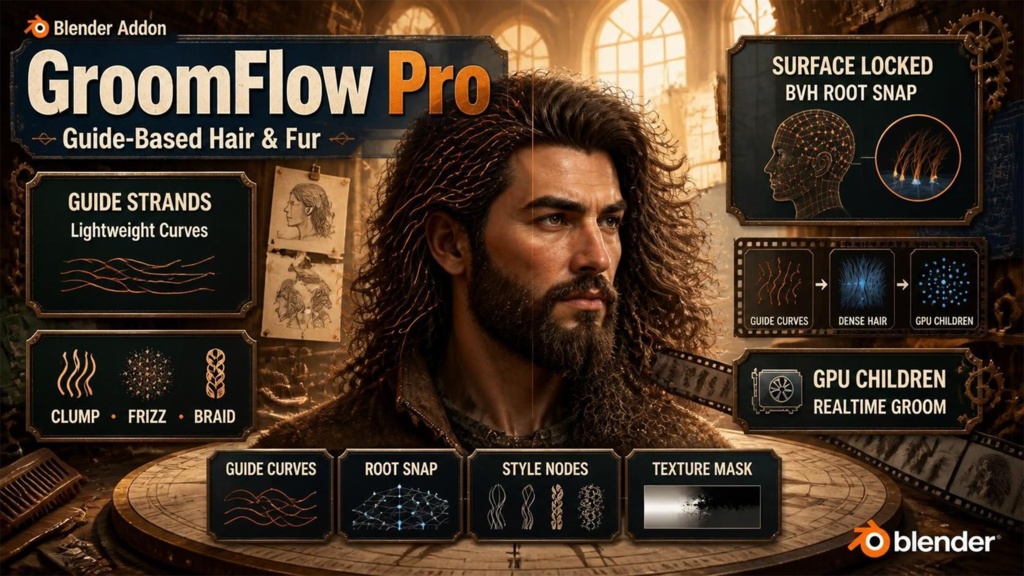
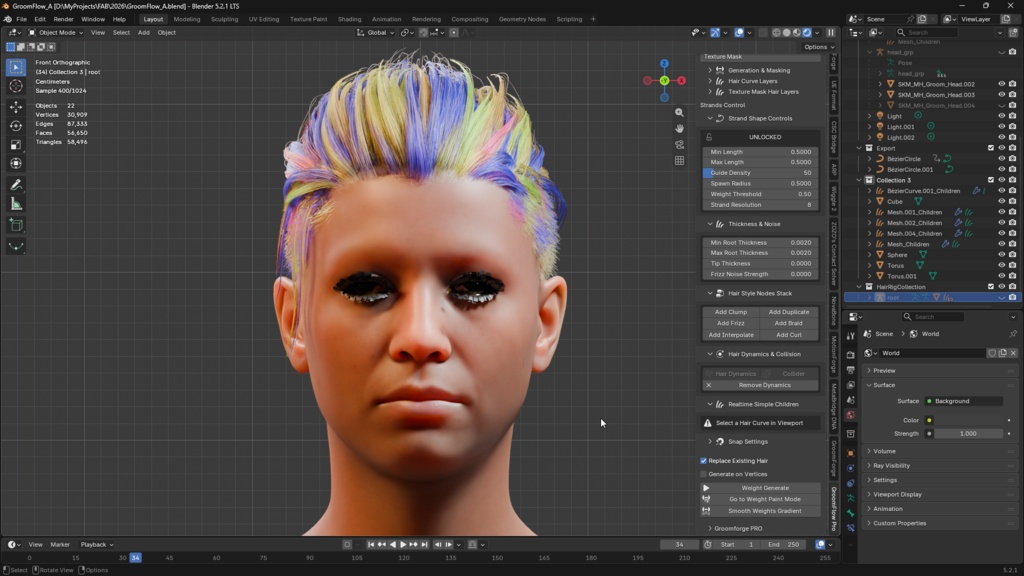
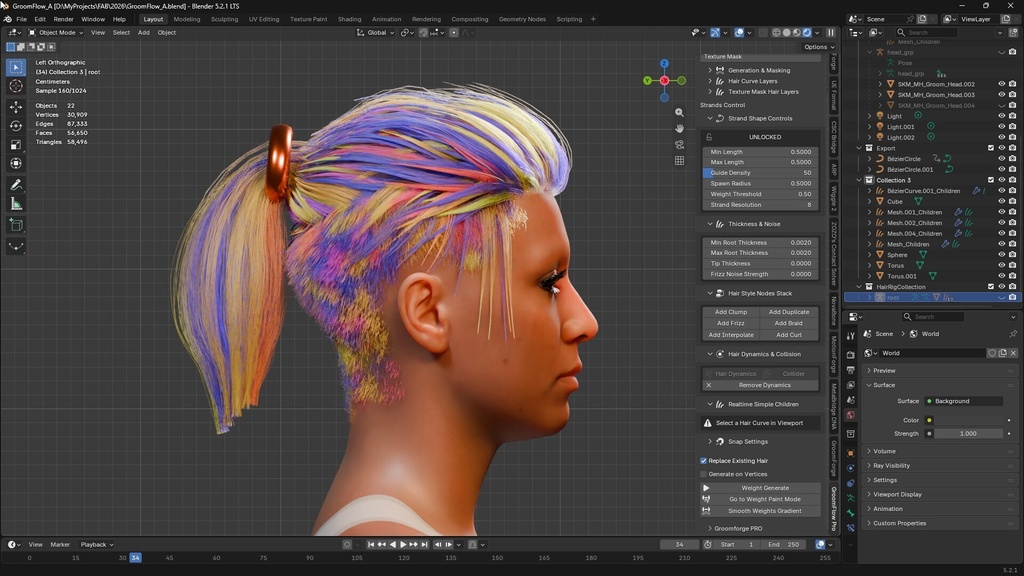
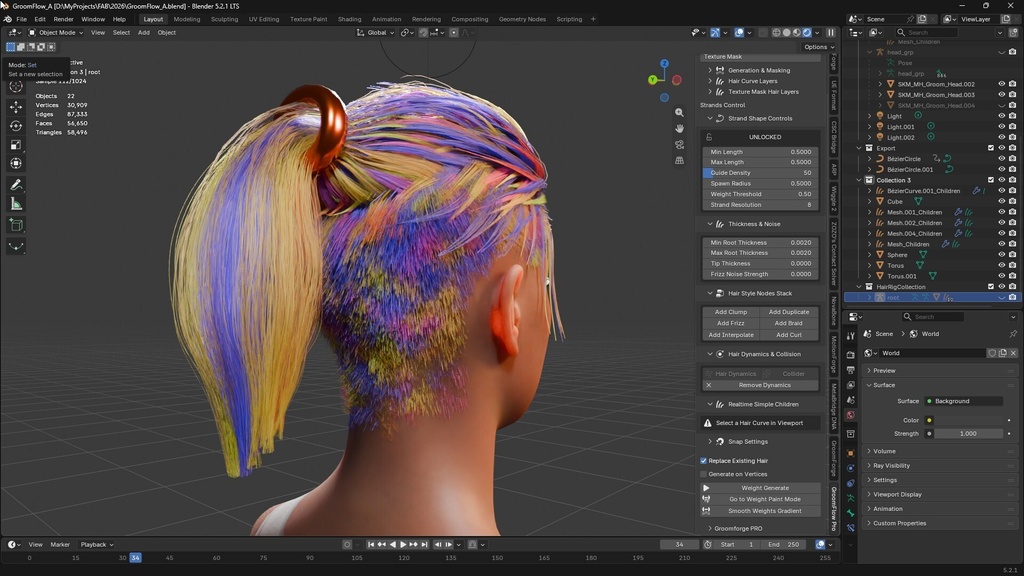
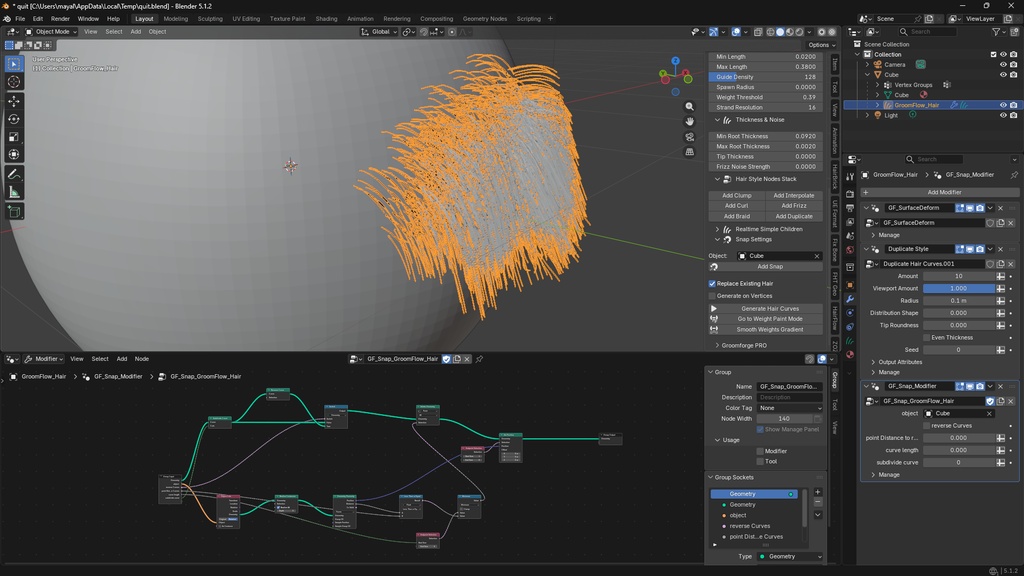
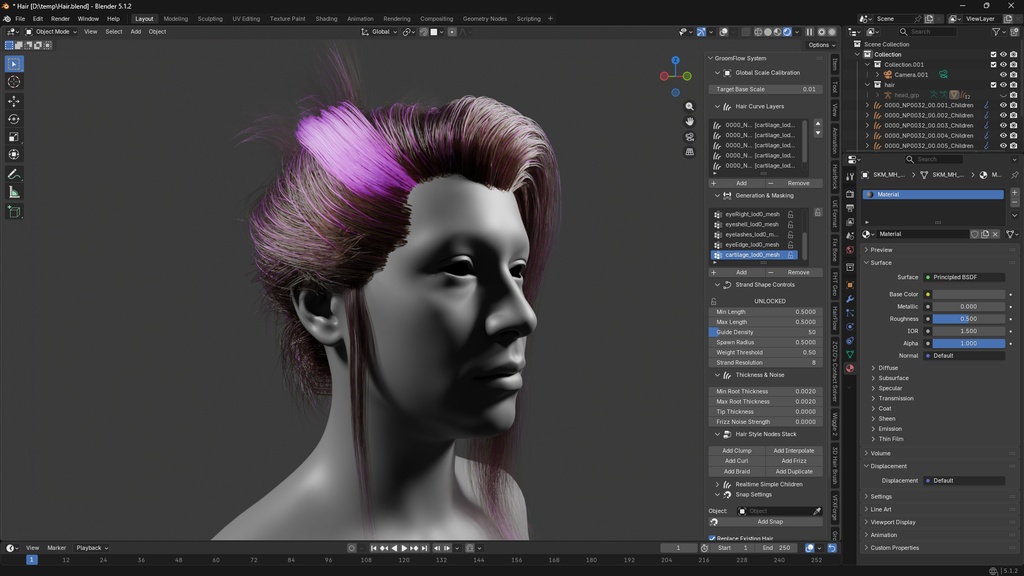
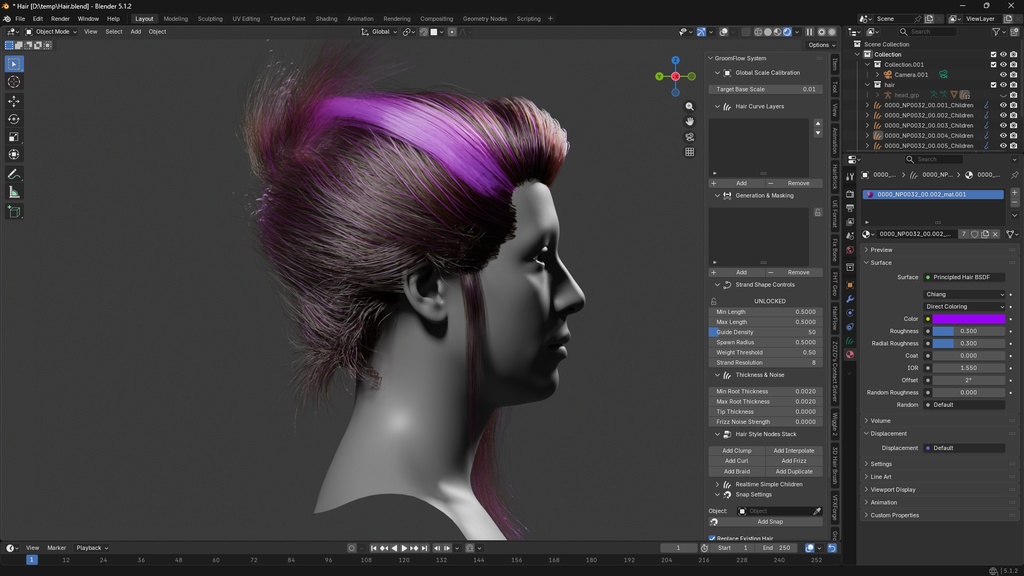
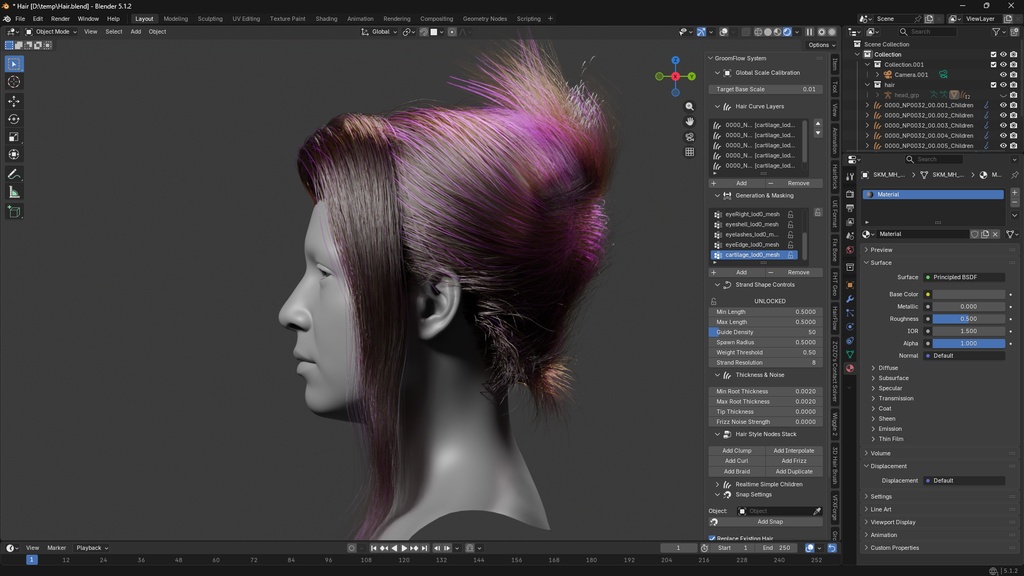
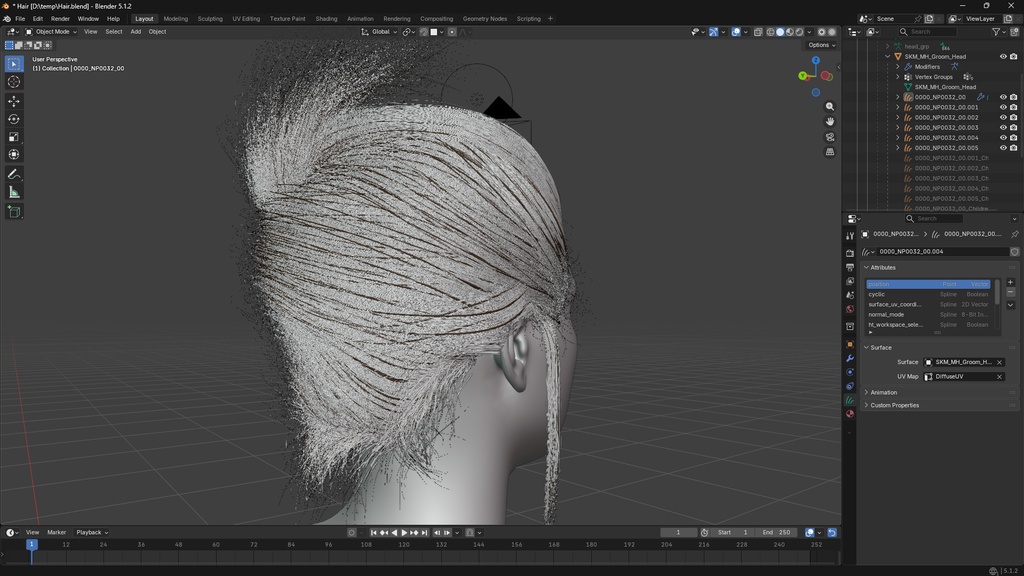
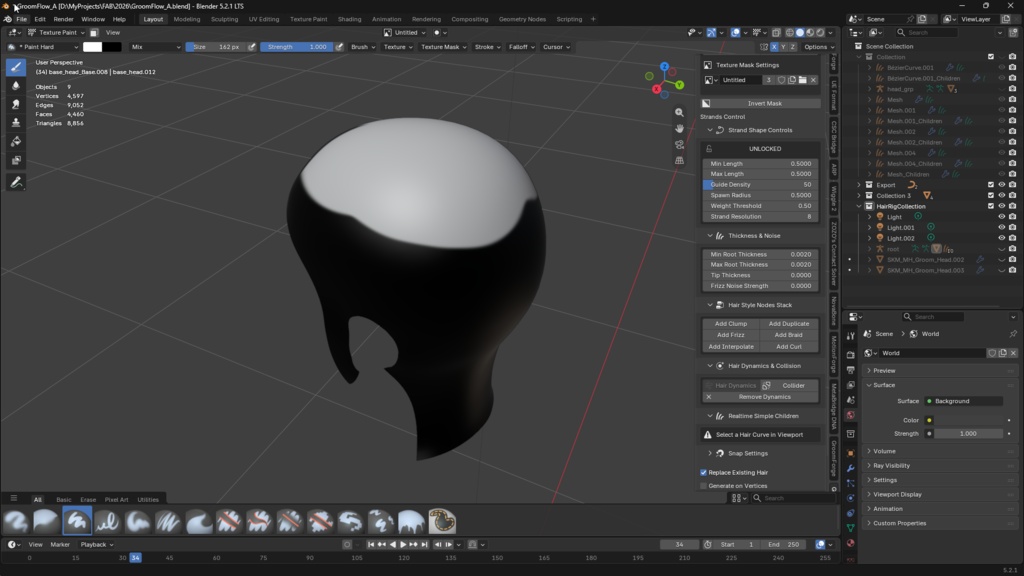
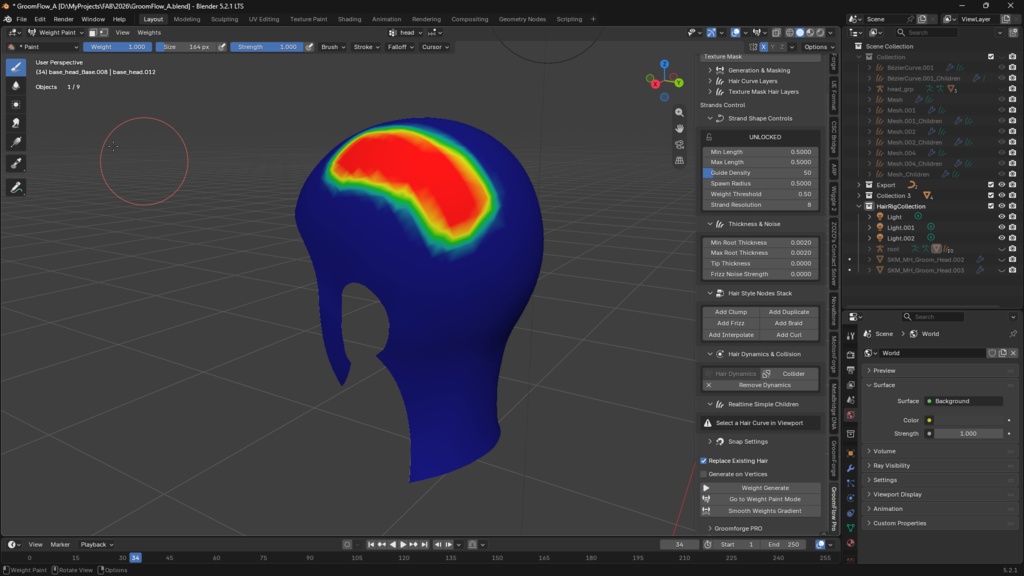


🔥 Boost Your Blender Grooming Workflow with GroomFlow Pro! GroomFlow Pro is an advanced, guide-driven grooming add-on for Blender designed for professional character artists. Say goodbye to heavy viewport lagging and messy root alignment. Generate dense, production-ready hair and fur effortlessly using a clean, non-destructive pipeline. 🚀 Key Features Guide-Based Strand Generation Create dense, high-quality hair strands from lightweight guide curves. Maximize visual fidelity without the performance limitations of traditional systems. Surface-Locked Distribution (BVHTree-Powered) No more floating roots or mesh clipping! Our continuous surface projection system perfectly snaps every strand root directly onto high-curvature areas like eyebrows, eyelashes, and beards. Optimized & Non-Destructive Workflow Keep your guide curves completely separate from the generated output. Enjoy a clean, mirror-professional pipeline ideal for character hair, fur, and Unreal Engine groom preparation. 📦 What's Included? GroomFlow Pro Blender Add-on (.zip) Official User Guidebook & Documentation Future updates and bug fixes 📖 Official Online Guidebook & Documentation For a detailed guide, step-by-step tutorials, and technical documentation of GroomFlow Pro, please visit our official site: 👉 https://mayalhc.github.io/GroomFlow_Pro We are quickly updating the guide with the latest information. 🆕 What's New in v1.8.3 Fix: Clump Noise changed the groom when Child Resolution changed The break-up was drawn per POINT rather than along the strand, so adding points packed in more and more zig-zag. Going from 6 points to 64 made the strands about ten times longer and moved them 12.9 mm on average on a 17.5 cm head - and raising the resolution never settled on an answer. The noise is now a function of where you are along the hair, so the shape holds still: at Child Resolution 32 the groom is within 0.11 mm and 0.6% of length of the same groom at 64, and it converges from there. Grooms that use Clump Noise will look slightly different from before. The strength of the effect is unchanged. Fix: the GPU and CPU paths built different grooms with Clump Noise on The noise phase came from fract(sin(...)), which keeps none of its low bits across float precisions - the two paths disagreed by more than the noise itself was worth (0.126 against an effect of 0.065). An integer hash replaces it and the paths now agree to 4e-5, which is rounding. This showed up on machines without GPU compute, and on grooms large enough to fall back to the CPU path. Faster builds and lighter live ticks The children and the guides were stacked into one new array and then transformed into another - two full copies of every point in the groom. They are now written straight into a buffer that is allocated once and reused. The root snap's correction was added to a strided slice numpy cannot vectorise. It now rides along with the transform that was already being done, on a contiguous buffer: the snap stage went from 112 ms to 46 ms at a million strands. At a million strands a build is 321 ms down to 290 ms and a live tick 334 ms down to 277 ms. Not a single point of the groom changed value.