

Symphony in A Minor
- ダウンロード商品¥ 1,000
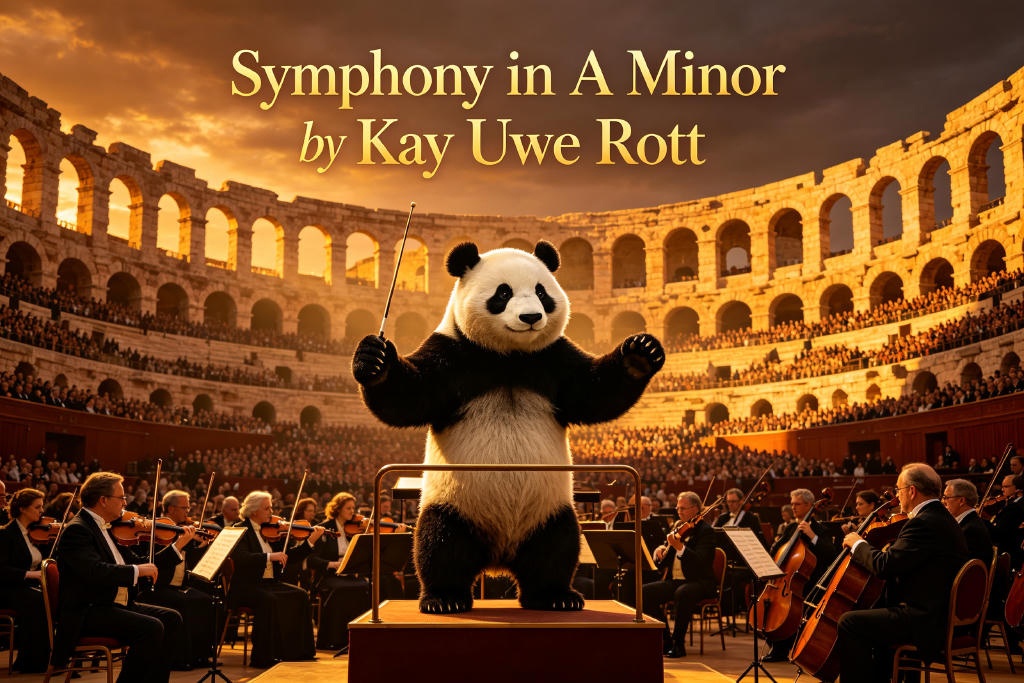

| 1 | Symphony in A Minor |
# Symphony in A Minor ### by Kay Uwe Rott ## 日本語 **Symphony in A Minor** は、ひとつの大きな音の塊として書いた交響曲ではありません。 私にとってオーケストラは、ひとつの楽器ではなく、たくさんの個性を持った人々の集まりです。 弦楽器が何かを語る。 オーボエが答える。 ファゴットが反対する。 ホルンが仲裁しようとする。 そして突然、フルートが小さな声で言う。 **「ねえ、私たちも話したいことがあるんだ。」** 私は音楽の中に、こうした瞬間を作りたかったのです。 楽器同士が話し、互いに耳を傾け、ときには衝突し、叫び合い、そしてまた静かに寄り添う。 だから、この交響曲には意図的に「断絶」があります。 大きな音のあとに突然訪れる静けさ。 予想していた方向とは違う場所へ進む旋律。 ひとつの楽器だけが残り、そこからもう一度音楽が始まる瞬間。 美しいだけの音楽ではなく、**生きている音楽**を書きたかった。 人間も同じだからです。 私たちは話し、誤解し、怒り、黙り、そしてまた話します。 愛することもあれば、争うこともあります。 そして、ときには何も言わずに隣にいるだけで、すべてが戻ってくる。 **Symphony in A Minor** は、そのような人間の時間をオーケストラの中に描いた作品です。 そして最後には、誰かひとりが勝つのではなく、 それぞれの声がもう一度ひとつの音楽になる。 それが、この作品を書きたかった理由です。 --- ## English **Symphony in A Minor** was not written as one great mass of orchestral sound. For me, an orchestra is not a single instrument. It is a gathering of many different personalities. The strings say something. The oboe answers. The bassoon disagrees. The horn tries to mediate. And suddenly, somewhere above them, the flutes speak quietly: **“Hey. We may be small, but we have something to say too.”** I wanted to create these moments inside the music. Instruments talking to each other. Listening to each other. Falling in love. Arguing. Shouting at each other. And, eventually, finding their way back to one another. That is why the symphony contains deliberate breaks and sudden changes. Silence after a great orchestral moment. A melody taking an unexpected turn. A single instrument remaining alone, before the music begins again from somewhere completely different. I did not want to write music that is simply beautiful. I wanted to write **music that is alive**. Because people are like this too. We speak. We misunderstand. We get angry. We become silent. And then, somehow, we begin to speak again. We love. We fight. We leave. We return. And sometimes, nothing needs to be said at all. Someone simply remains beside you, and everything begins to make sense again. **Symphony in A Minor** is my attempt to tell this human story through an orchestra — not through words, but through sound, contrast, dialogue and silence. In the end, nobody has to win. Every voice simply finds i