
限定製作ミニチュア複製原画「天一號 2605 -戦艦 大和-」
Physical (worldwide shipping)

- Ships within 5 daysPhysical (direct)3,850 JPY
Physical (ship to Japan)
- Ships within 5 daysPhysical (direct)3,850 JPY
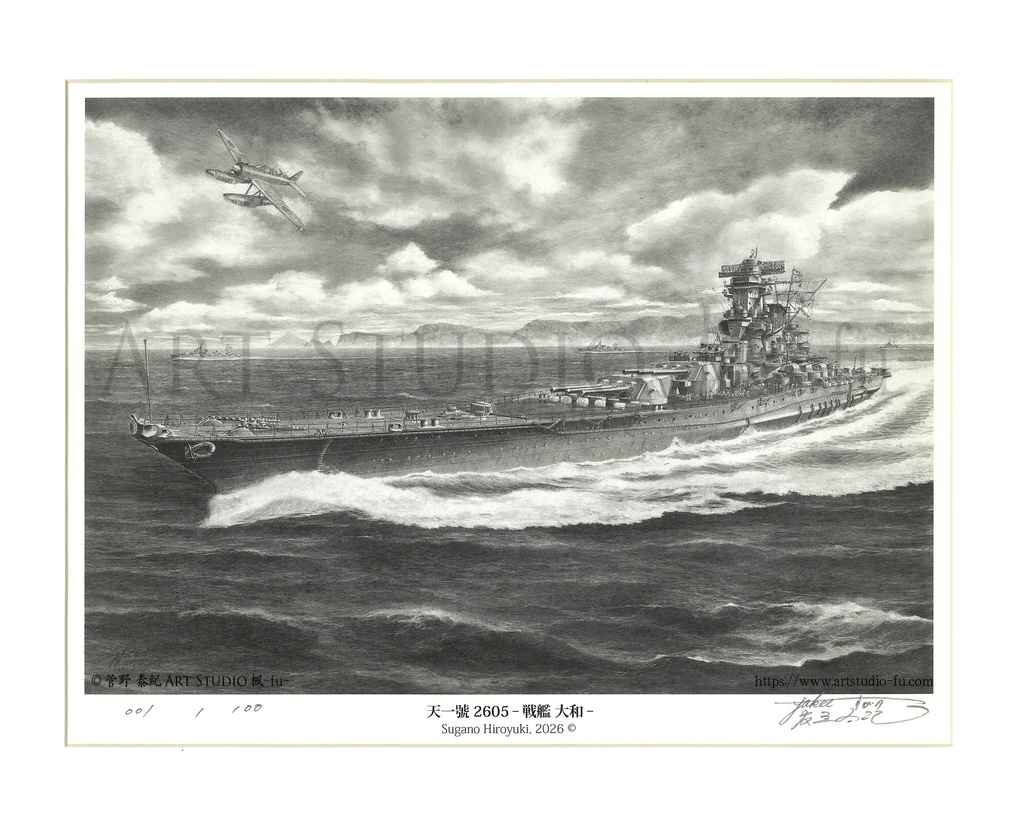
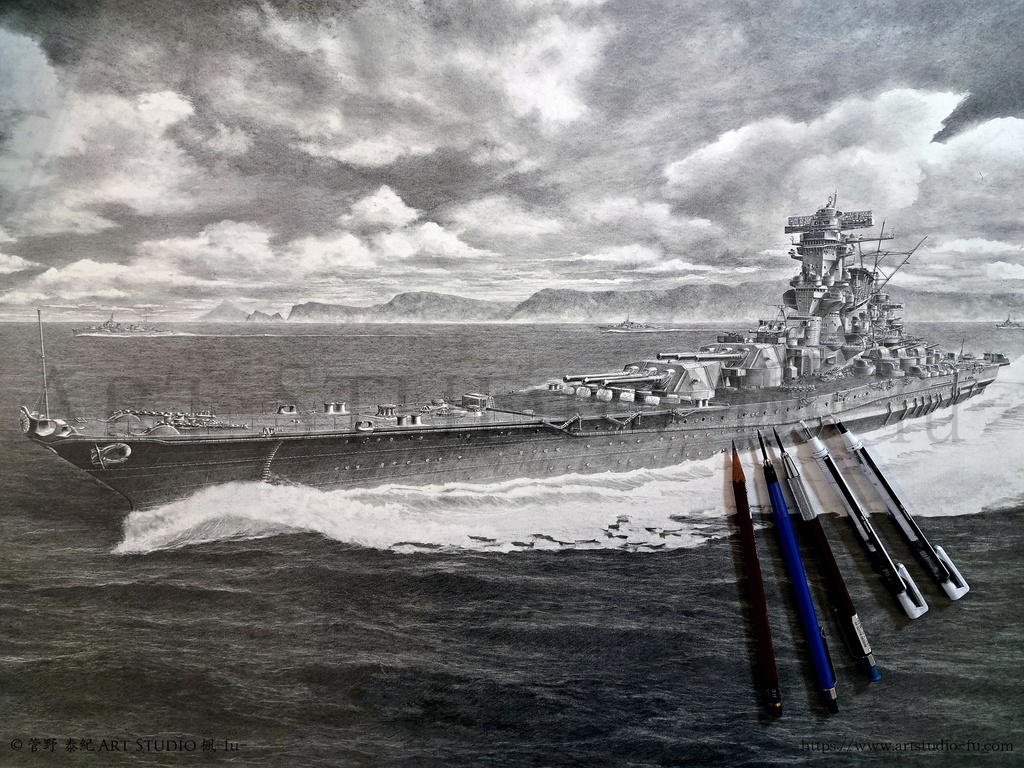
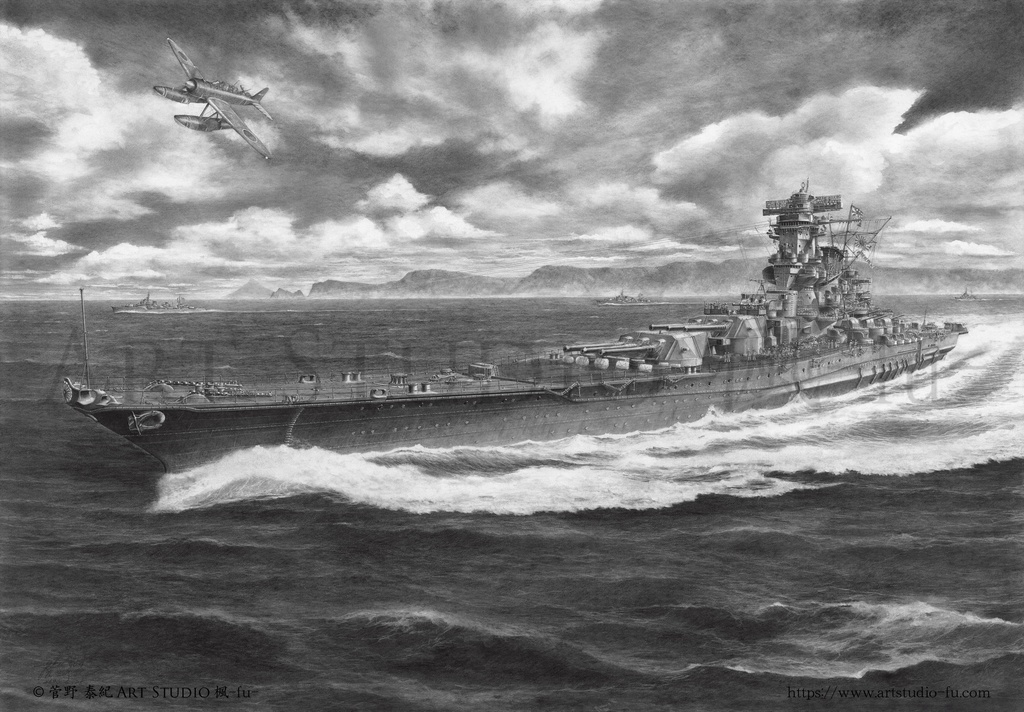


【100枚限定ジークレー版複製原画】 従来のレプリカ画から大幅にクオリティを向上!従来のレプリカ画は、網点で構成される印刷でしたが、この度よりジークレー(デジタルリトグラフ)版のミニチュア複製原画(100枚限定)として新たに販売開始しました。熟練の専属職人の手で仕上げられた複製画は、ミニチュアながら極めて原画に忠実に細部を再現しています。外寸サイズはコレクションしやすい八つ切り(303㎜×242㎜)。 エディションナンバーと作家直筆サイン入り! A significant improvement in quality from our previous reproductions! The conventional reproductions were printed with reticulated dots, but now they are available in a new giclee (digital lithograph) version as miniature original reproductions (limited to 100 pieces). The miniature reproductions, hand-finished by skilled and exclusive artisans, are extremely faithful in detail to the originals. The outer size is an octavo (303 mm x 242 mm) for easy collection. The item will have an edition number and will be autographed by the artist!
【作品解説 / Description of the work】
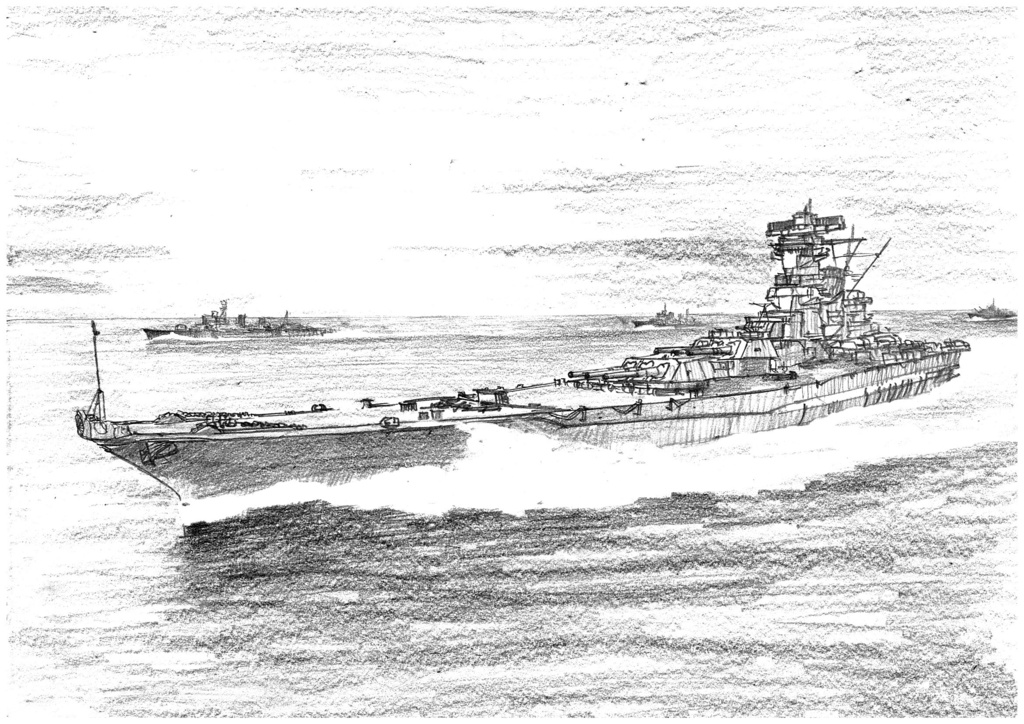
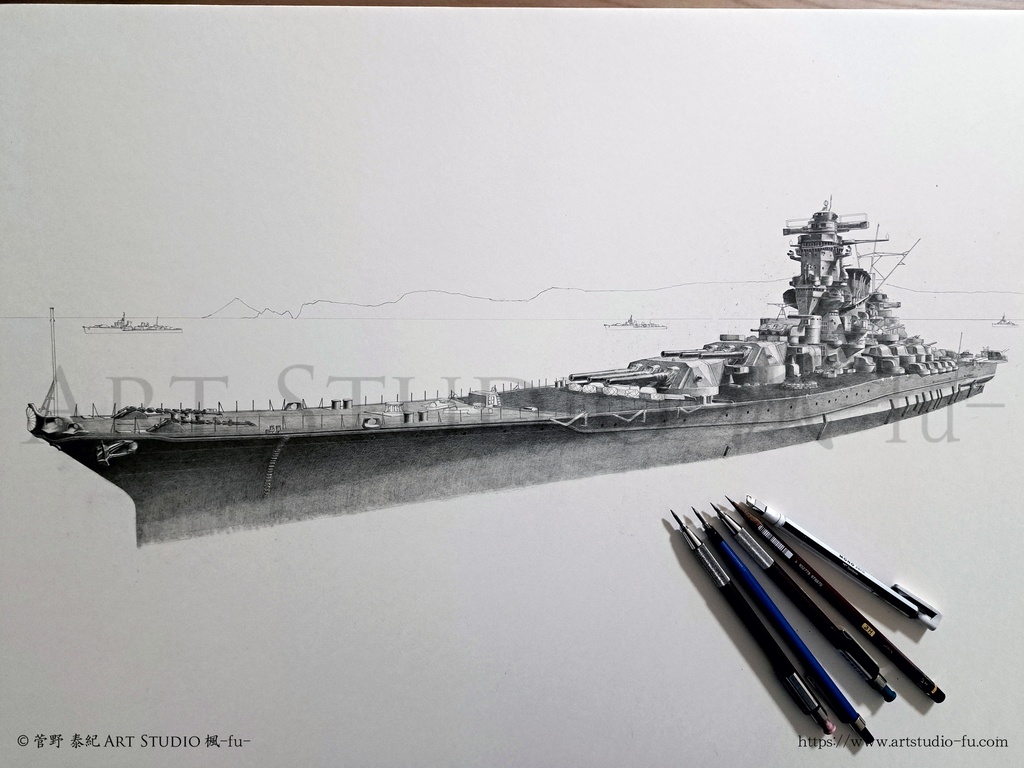
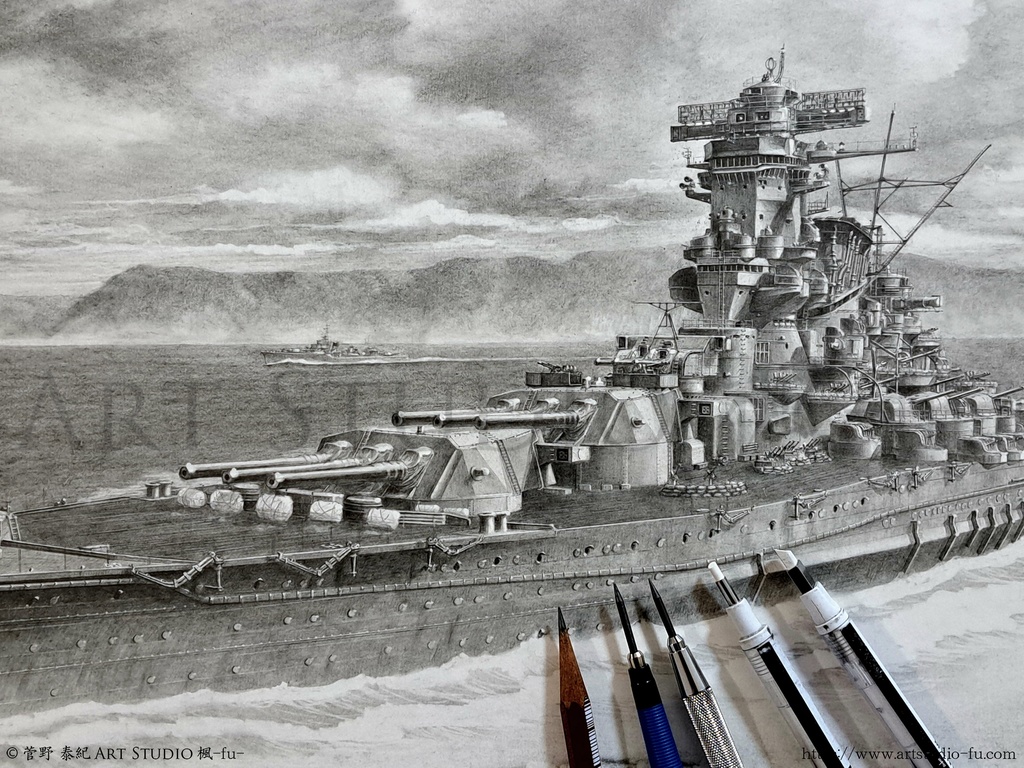
鉛筆画『天一號2605 ―戦艦 大和―』 Pencil Drawing: “Operation Ten-Go Ⅰ 2605 -Battleship Yamato-” 戦艦「大和」は、建造から最期までのエピソードが極めて印象深く、今なお多くの日本人の心に大きな存在として残り続けています。帝国海軍の軍人たちは「大和」を海軍の象徴として誇りに思い、「不沈戦艦大和」が戦い続ける限り、日本は決して滅びないと信じて戦いました。本作品は、連合艦隊が南西諸島・沖縄方面の防衛のために立案・発動した天一号作戦をテーマに、最後の戦いに臨む「大和」を描いたものです。木製甲板は黒く塗られ、中央構造物周辺には24門の連装高角砲と150門を超える対空機関銃が集中装備されており、その姿はまるでハリネズミのよう。まさに大艦巨砲主義の終焉を象徴しているかのようです。同作戦では、第一遊撃部隊(第二艦隊のうち、戦艦「大和」、軽巡洋艦「矢矧」、駆逐艦8隻からなる)が「一億総特攻」の先駆けとなる水上特攻部隊として、昭和20年(1945年)4月6日に沖縄方面へ出撃しました。翌7日、アメリカ海軍第58任務部隊がこれを迎撃。午後12時40分から約2時間にわたる激しい戦闘の末、「大和」以下6隻は沖縄に到達することなく壮絶な最期を遂げました。この天一号作戦は、帝国海軍の大型水上艦による最後の組織的攻撃となりました。 本作品が描くシーンは、昭和20年4月7日早朝、大和が大隅半島沖を南下し、最後の艦載機である零式水上偵察機を発艦させた直後の瞬間です。発艦した零式水上偵察機が大和の周囲を旋回しながら、最後の別れを告げている様子をイメージしています。艦隊は第三警戒航行序列を形成しており、「大和」の背後には駆逐艦「浜風」(左端)、「雪風」(中央)、「冬月」(右端)が続いています。また、第一遊撃部隊が最後に見た日本の島影として、大隅半島と、その向こうに霞む開聞岳が遠くに描かれています。 The battleship Yamato remains a profoundly significant presence in the hearts of many Japanese people, its story from construction to final moments deeply etched in memory. Imperial Navy officers took pride in the Yamato as the symbol of the Navy, believing Japan would never fall as long as the “unsinkable battleship Yamato” continued to fight. This work depicts the Yamato facing its final battle, centered on Operation Ten-Go 1, a plan devised and launched by the Combined Fleet to defend the Southwest Islands and Okinawa area. Its wooden deck was painted black, and around the central superstructure, 24 twin high-angle guns and over 150 anti-aircraft machine guns were densely concentrated, making it look like a hedgehog. It seemed to symbolize the very end of the big-gun battleship doctrine. In this operation, the First Raiding Force (part of the Second Fleet, consisting of the battleship Yamato, the light cruiser Yahagi, and eight destroyers) launched as a surface special attack force, the forerunner of the “One Hundred Million Total Special Attack,” heading for the Okinawa area on April 6, 1945. The following day, April 7th, the U.S. Navy Task Force 58 intercepted them. After a fierce battle lasting approximately two hours from 12:40 PM, the Yamato and five other ships met a spectacular end without reaching Okinawa. This Operation Ten-Go 1 became the Imperial Japanese Navy's final organized attack using large surface vessels. The scene depicted in this work captures the moment just after dawn on April 7, 1945, when the Yamato was heading south off the Osumi Peninsula and launched its final aircraft, the Zero-type seaplane reconnaissance aircraft. It imagines the scene of the launched Zero-type seaplane reconnaissance aircraft circling around the Yamato, bidding its final farewell. The fleet is arranged in the Third Alert Formation. Behind the Yamato follow the destroyers Hamakaze (far left), Yukikaze (center), and Fuyutsuki (far right). Also depicted in the distance are the Osumi Peninsula and the hazy Mount Kaimon beyond it, the last glimpse of Japanese islands seen by the First Raiding Force.