
限定製作ミニチュア複製原画「蒼穹への離水-川西H8K二式大型飛行艇-」
- Ships within 5 daysOut of StockPhysical (direct)3,850 JPY
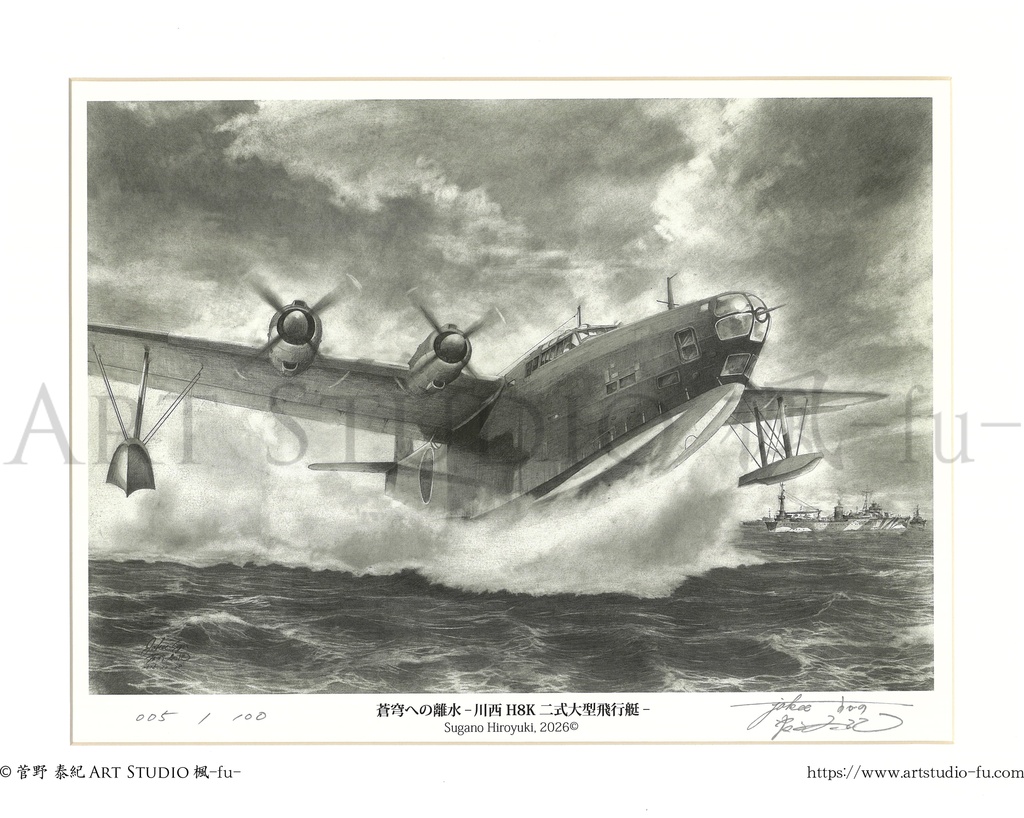


【100枚限定ジークレー版複製原画】 従来のレプリカ画から大幅にクオリティを向上!従来のレプリカ画は、網点で構成される印刷でしたが、この度よりジークレー(デジタルリトグラフ)版のミニチュア複製原画(100枚限定)として新たに販売開始しました。熟練の専属職人の手で仕上げられた複製画は、ミニチュアながら極めて原画に忠実に細部を再現しています。外寸サイズはコレクションしやすい八つ切り(303㎜×242㎜)。 エディションナンバーと作家直筆サイン入り! A significant improvement in quality from our previous reproductions! The conventional reproductions were printed with reticulated dots, but now they are available in a new giclee (digital lithograph) version as miniature original reproductions (limited to 100 pieces). The miniature reproductions, hand-finished by skilled and exclusive artisans, are extremely faithful in detail to the originals. The outer size is an octavo (303 mm x 242 mm) for easy collection. The item will have an edition number and will be autographed by the artist!
【作品解説 / Description of the work】
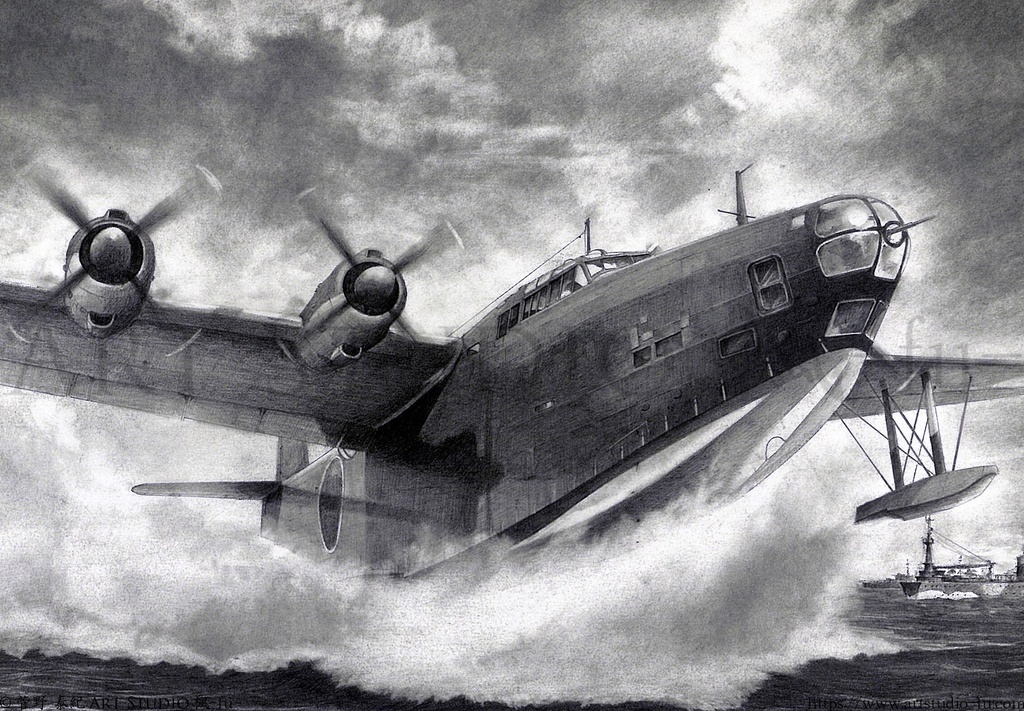
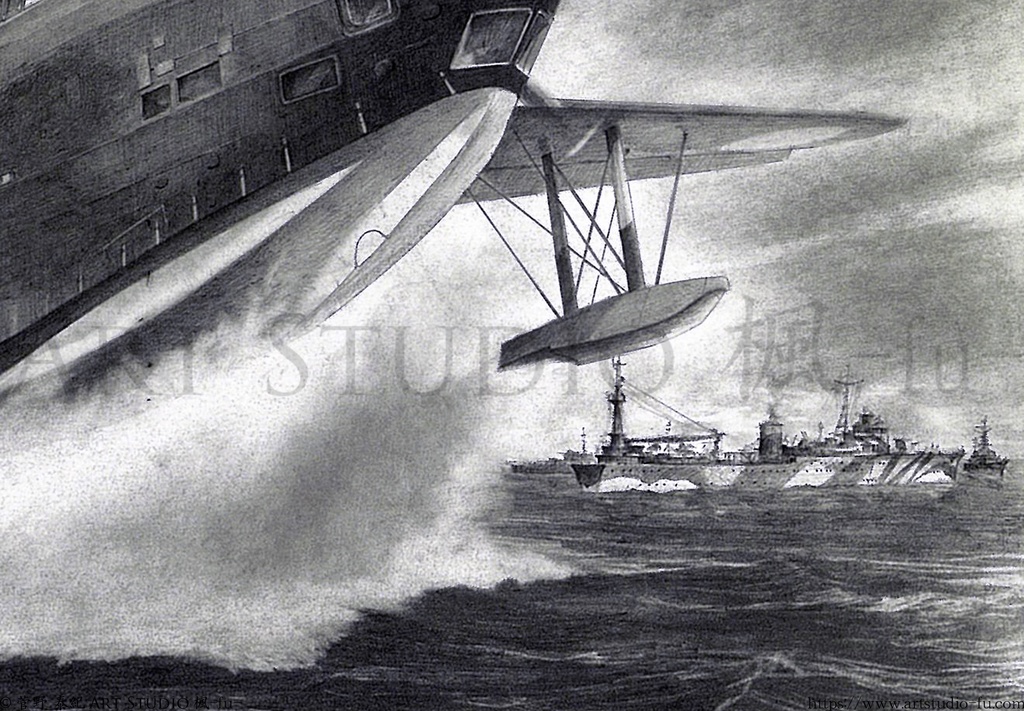
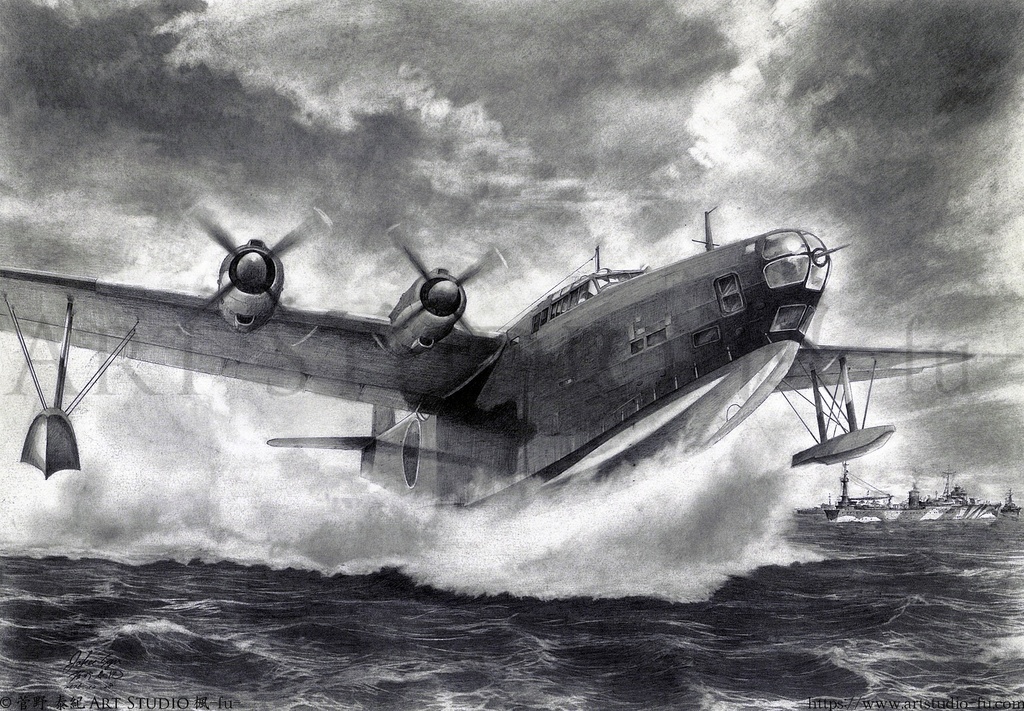
鉛筆画『蒼穹への離水 ―川西 H8K 二式大型飛行艇―』 Pencil Drawing: “Takeoff into the Blue Sky — Kawanishi H8K Type 2 Flying Boat —” 二式飛行艇は、川西航空機(現・新明和工業)が開発した日本海軍の大型四発飛行艇です。昭和13(1938)年、海軍の要求に応じて開発が始まり、昭和17(1942)年に制式採用されました。飛行艇でありながら陸上機に匹敵する高速性能と、並外れた航続力を備え、流麗な艇体形状や離水時の飛沫を抑える独創的な艇底設計など、当時の先進技術が随所に盛り込まれました。強固な機体構造と充実した防御火器も特徴で、世界最高水準の性能を誇る飛行艇として知られました。 大東亜戦争では、その高速性能と長大な航続力を活かし、太平洋・インド洋の広大な海域で長距離哨戒、偵察、爆撃などに従事しました。なかでも昭和17(1942)年3月、マーシャル諸島から潜水艦による洋上補給を受け、ハワイ・オアフ島を再空襲した「K作戦」は、本機の長大な航続力を象徴する作戦として知られています。その後もエスピリトゥサント島、オーストラリア本土、セイロン島、カルカッタなどへの遠距離作戦に投入されました。しかし、戦局の悪化とともに連合軍の航空戦力が増強され、日本側が制空権を失うと、優れた性能を持つ本機も苦戦を強いられ、多くの機体が失われました。 二式飛行艇の技術と設計思想は、戦後の新明和工業に受け継がれ、対潜哨戒飛行艇PS-1、救難飛行艇US-1・US-1Aを経て、今日のUS-2へと発展しています。かつて広大な海原で敵を捜し求めた飛行艇は、現在、人命を救う航空機として新たな使命を担っています。 本作は、勇壮に水しぶきを巻き上げながら、今まさに海面を離れようとする第八〇二航空隊所属の二式飛行艇を描いたものです。その後方には、本機の運用と整備を支えた水上機母艦「秋津洲」の姿があり、飛び立つ機を静かに見送っています。広大な海原から大空へと飛翔する、その力強い一瞬を描きました。なお、本作は平成28(2016)年、靖國神社「みたままつり」において、雪洞(ぼんぼり)として奉納され会場に掲げられました。 The Kawanishi H8K was a large, four-engine flying boat developed by Kawanishi Aircraft Company (now ShinMaywa Industries) for the Imperial Japanese Navy. Development began in 1938 in response to a naval requirement, and the aircraft was officially adopted for service in 1942. Despite being a flying boat, it possessed exceptional speed comparable to that of land-based aircraft, together with extraordinary long-range capability. Its design incorporated numerous advanced technologies for its time, including a streamlined hull and an innovative hull-bottom configuration that reduced water spray during takeoff. Its robust airframe and extensive defensive armament were also notable features, establishing the H8K as one of the world's most advanced flying boats of its era.During the Greater East Asia War (Pacific War), the H8K made extensive use of its high speed and exceptional range in long-distance maritime patrol, reconnaissance, and bombing operations across the vast expanses of the Pacific and Indian Oceans. Among its most notable operations was Operation K in March 1942, during which H8K flying boats received fuel supplies from submarines in the Marshall Islands before conducting a second air raid on Oahu, Hawaii. This operation became a striking demonstration of the aircraft's extraordinary range. The H8K was subsequently deployed on long-range missions to locations including Espiritu Santo, mainland Australia, Ceylon, and Calcutta. However, as the war progressed and Allied air power grew increasingly dominant, Japan gradually lost control of the skies. Even this exceptionally capable aircraft was forced to endure increasingly difficult combat conditions, and many H8Ks were ultimately lost.The technology and engineering principles developed for the H8K were carried forward after the war by ShinMaywa Industries. This legacy evolved through the PS-1 anti-submarine patrol flying boat and the US-1 and US-1A search-and-rescue flying boats, culminating in today's US-2. The technology of these flying boats, once used to search vast oceans for enemy forces, now serves a new purpose: saving human lives. This artwork depicts a Kawanishi H8K of the 802nd Naval Air Group at the very moment it is about to lift off the water, powerfully sending great plumes of spray into the air. In the background stands the seaplane tender Akitsushima, which supported the operation and maintenance of these aircraft, quietly watching as the flying boat takes to the skies. The painting captures this powerful instant as the aircraft rises from the vast expanse of the ocean toward the open sky.This artwork was also dedicated and displayed as a bonbori (traditional Japanese decorative lantern panel) at the Mitama Festival held at Yasukuni Shrine in 2016.