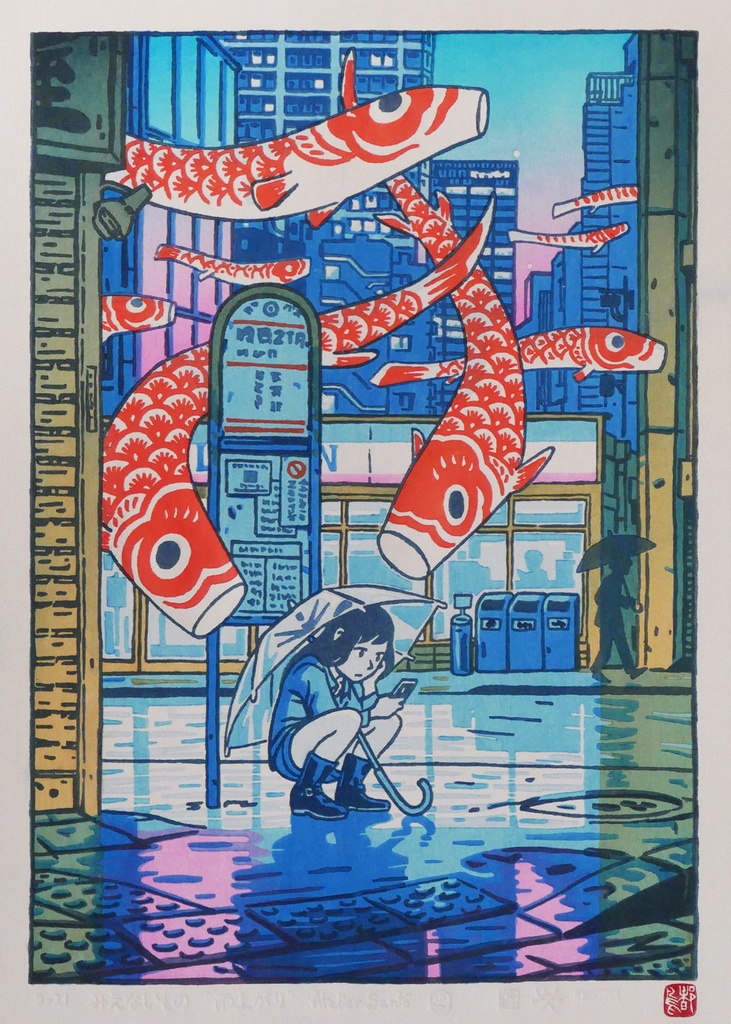
雨上がり / After the Rain
Physical (worldwide shipping)

- Shipping Date (Approx): 2026-08-31Ships by Anshin-BOOTH-PackPhysical (direct)20,000 JPY
Physical (ship to Japan)
- Shipping Date (Approx): 2026-08-31Ships by Anshin-BOOTH-PackPhysical (direct)20,000 JPY


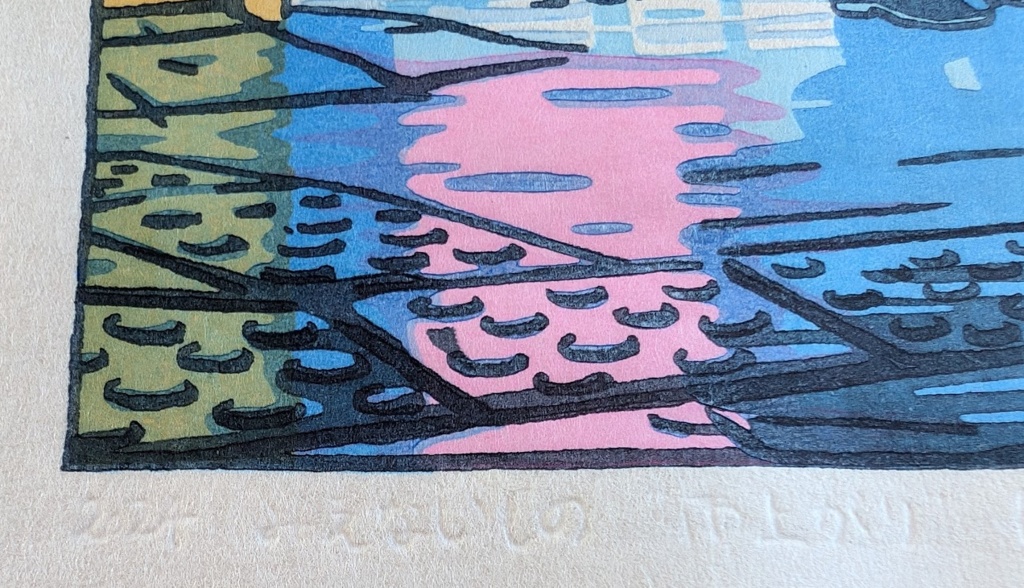
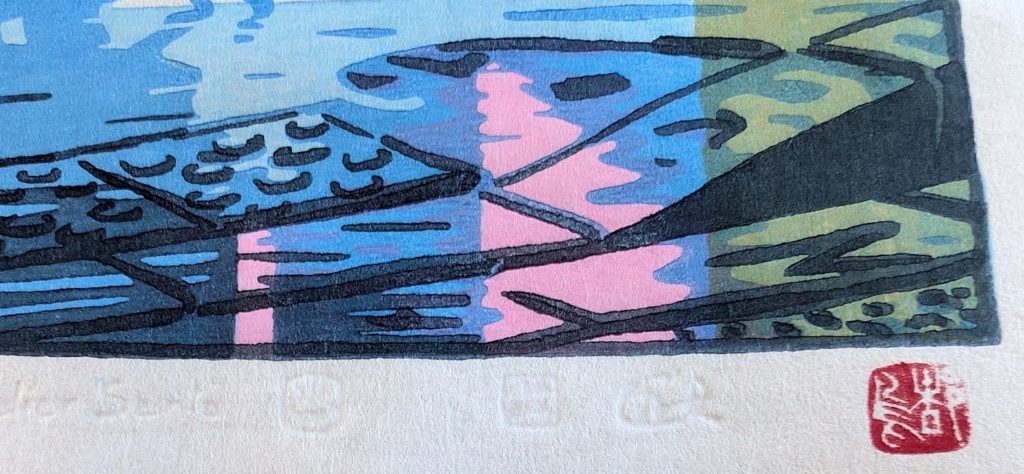
大判錦絵 水性多色木版(和紙:越前生漉奉書) ・イメージサイズ 260×185mm ・紙サイズ 280×200mm 絵師:アトリエセントー@AtelierSento アートディレクション:つちもちしんじ 彫/摺:柏木隆志
「みえないもの」―Being Invisible―
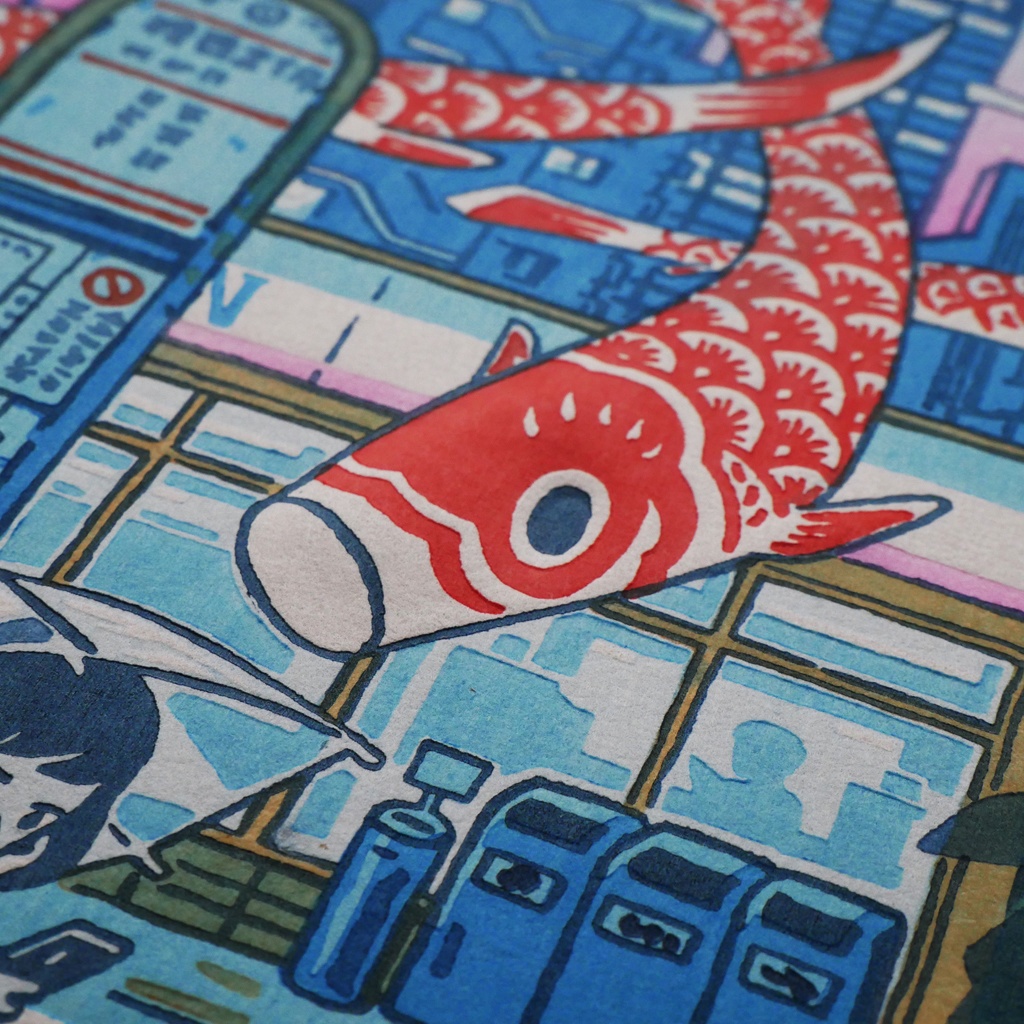
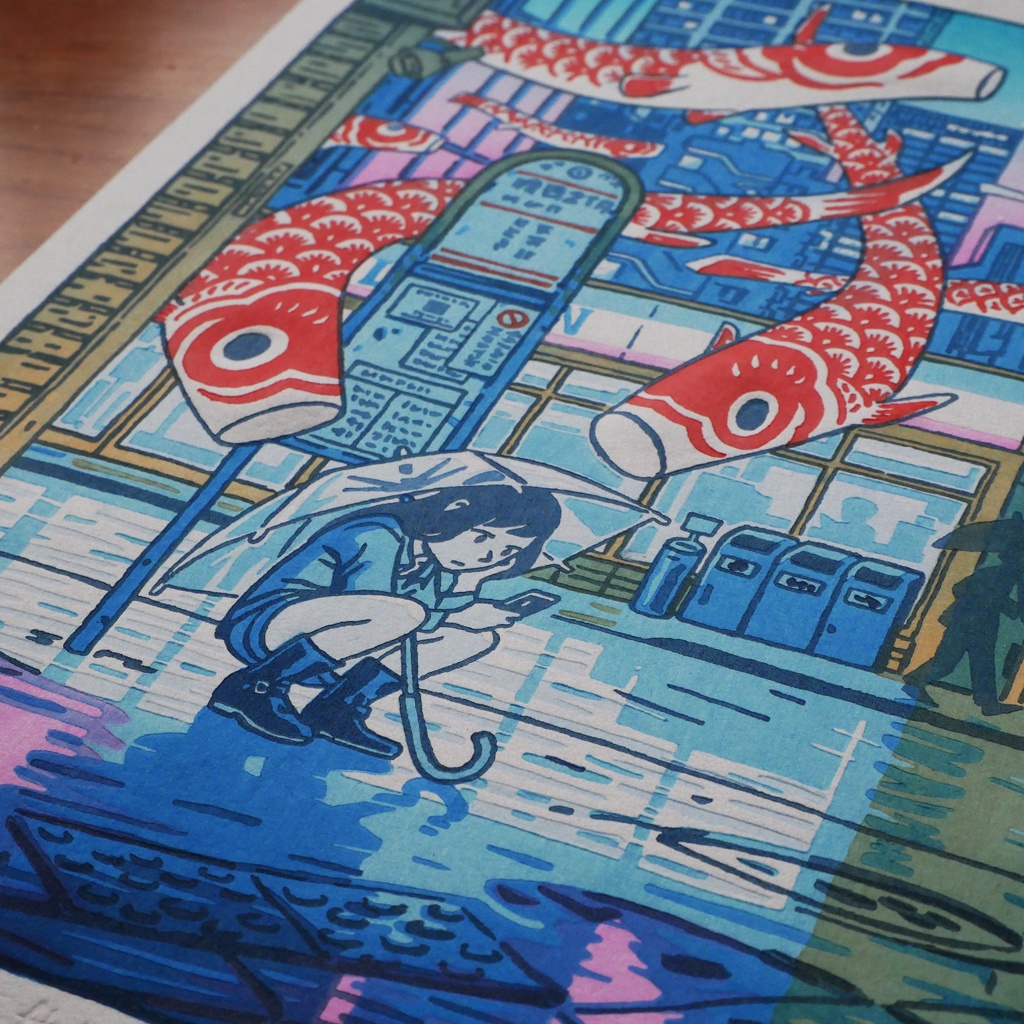
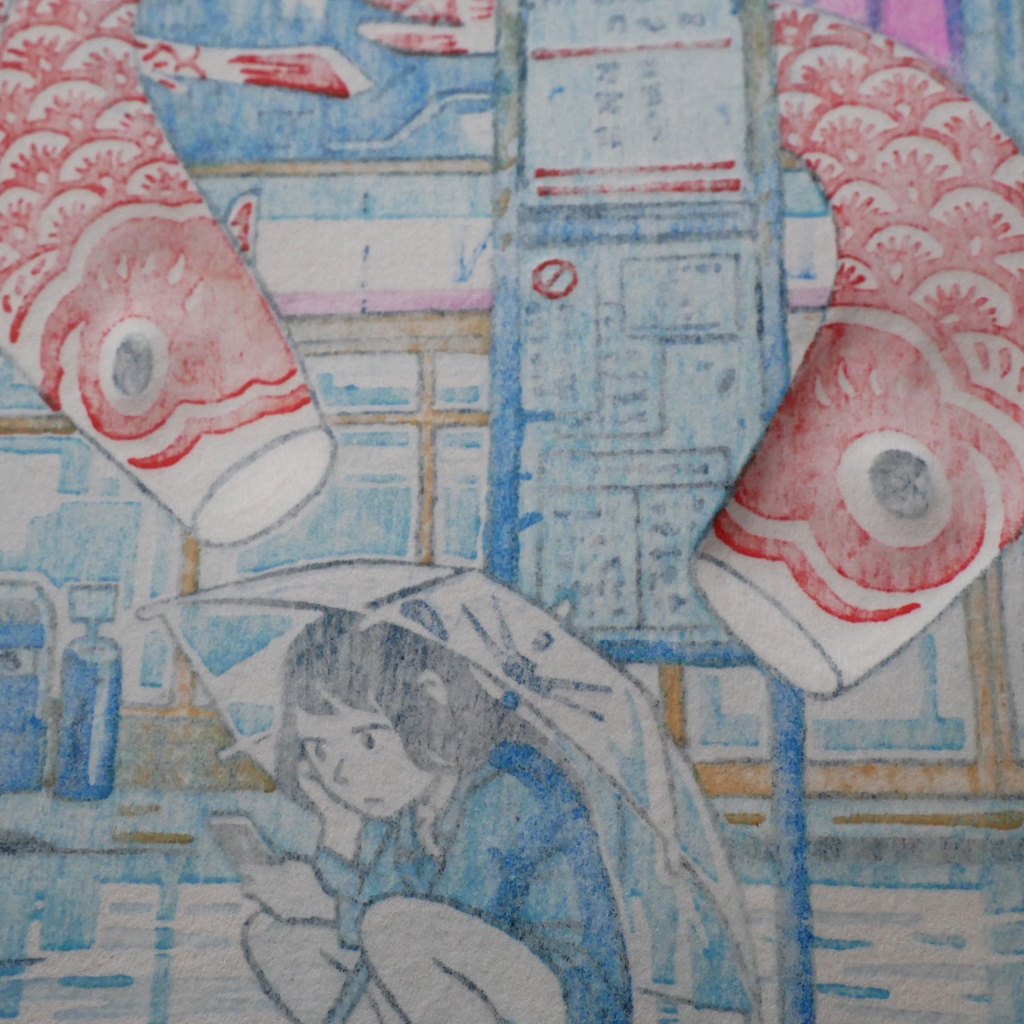
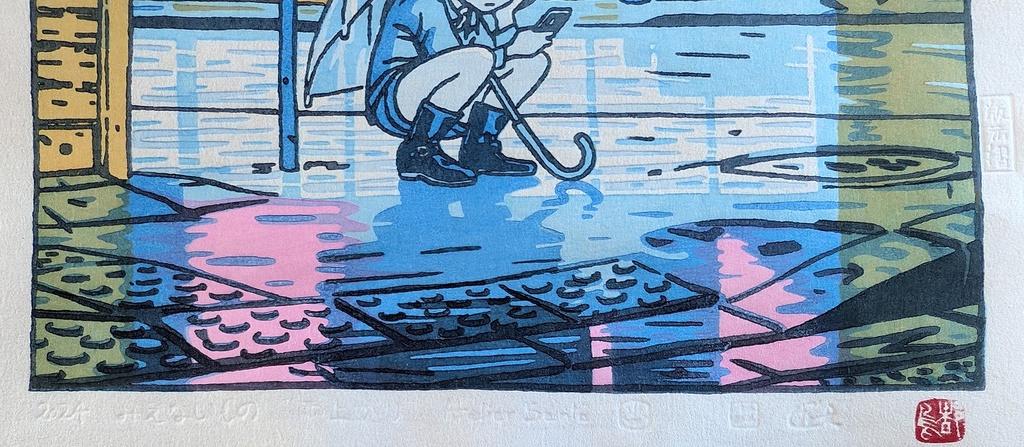
こどもの日に飾られていた鯉のぼりは、風に流され、街で迷子になってしまいました。 それ以来、彼らは大きな川を求め、ガラスとコンクリートの迷宮をさまよっています。 雨が上がり、再び空へ飛び立とうとする一瞬。大きな目で、こっそりと人間たちを眺めながら……。 【作品データ】 イメージサイズ:260 × 185ミリ 紙サイズ:280 × 200ミリ 大判錦絵 越前生漉奉書 水性多色木版/手摺り 絵師:アトリエ・セントー @AtelierSento アートディレクション:つちもちしんじ 彫り・摺り:柏木隆志 【アトリエ・セントーによる作品解説】 私たちは日本を旅するとき、よく妖怪のことを思い浮かべます。 誰にも見ることはできませんが、彼らは今も私たちの周りにいるのかもしれません。私たちが描きたいのは、目に見えるものと見えないものの境界にある、奇妙な世界です。 鯉のぼりを初めて見たのは、新潟での長く厳しい冬が終わる頃でした。 信濃川に沿って、何十匹もの鯉が空に浮かんでいました。風を受け、水の中にいるように波打つその姿は、生きているかのようでした。鮮やかな色彩が、鯉たちに不思議な存在感を与えていました。 同じ頃、日本中では何千匹もの鯉が、誰を驚かせることもなく悠々と空を泳いでいました。 それは私たちにとって、本当に鮮烈な光景でした。 【アートディレクション:つちもちしんじ】 僕は現在、版元「都鳥」で、浮世絵と新版画の歴史を現代へつなぐ「令和新版画」というプロジェクトに参加しています。 江戸時代に栄えた浮世絵は、19世紀末のフランスで広がったジャポニスムを通じて、印象派をはじめとする西洋の画家たちに大きな影響を与えました。浮世絵に影響を受けたゴッホやモネの作品は、その後、日本でも長く愛されてきました。 このように、東洋と西洋には、異なる文化を互いに受け入れ、重ね合わせてきた歴史があります。 僕たちが構想の土台としている新版画もまた、衰退しつつあった浮世絵の技術に、西洋絵画の表現を取り入れることで生まれたものでした。 こうした文化の交差は、現代でも漫画やアニメーションをはじめとする表現の中で続いています。フランスの色彩漫画であるバンド・デシネを代表するメビウスと、手塚治虫、大友克洋、宮崎駿をはじめとする日本の漫画家やアニメーション作家たちも、国境を越えて互いの表現に影響を与えてきました。 その関係を象徴する作品として、バンド・デシネの作家に浮世絵を描いてもらいたいと考えたとき、日本の妖怪や文化を題材としてきたアトリエ・セントーの二人が、すぐに思い浮かびました。 突然の依頼を快く引き受け、漫画制作の忙しい合間を縫って、素晴らしい木版画のための原画を描いてくださったアトリエ・セントーに、心から感謝します。 この作品が、日本とフランスの文化交流をさらに深める一つのきっかけになることを願っています。 【English】 The koinobori displayed for Children’s Day were carried away by the wind and became lost in the city. Ever since, they have wandered through a labyrinth of glass and concrete in search of a great river. Now the rain has stopped. Just as they are about to take flight once again, they quietly watch the people below through their enormous eyes. Print details Image size: 260 × 185 mm Paper size: 280 × 200 mm Format: Oban nishiki-e Paper: Echizen kizuki hōsho washi Technique: Water-based multicolour woodblock print, printed by hand Artist: Atelier Sento @AtelierSento Art direction: Shinji Tsuchimochi Woodblock carving and printing: Takashi Kashiwagi Artist’s statement by Atelier Sento Whenever we travel through Japan, we often find ourselves thinking about yōkai. No one can see them, yet they may still be all around us. What we want to depict is the strange world that exists somewhere between the visible and the invisible. We first encountered koinobori, Japanese carp streamers, in Niigata at the end of a long and severe winter. Dozens of carp were floating in the sky along the Shinano River. Blown by the wind, their bodies rippled as though they were swimming through water, making them seem vividly alive. Their brilliant colours gave them a mysterious, almost supernatural presence. At the same time, thousands of carp were swimming peacefully through the skies across Japan without surprising anyone. For us, it was an unforgettable sight. Art direction by Shinji Tsuchimochi I am currently involved in Reiwa Shin-hanga, a project by the Japanese woodblock print publisher Miyakodori that seeks to carry the histories of ukiyo-e and shin-hanga into the present day. Ukiyo-e flourished during the Edo period. Through the rise of Japonisme in late nineteenth-century France, it had a profound influence on Western artists, particularly the Impressionists. The works of artists such as Vincent van Gogh and Claude Monet, who were themselves influenced by Japanese art, later came to be widely admired in Japan. Eastern and Western cultures have a long history of encountering one another, exchanging ideas and combining different forms of expression. Shin-hanga, which forms the conceptual foundation of our project, was also born through this exchange. As ukiyo-e declined, its traditional woodblock-printing methods were combined with approaches derived from Western painting, creating a new form of Japanese printmaking. This cultural crossover continues today through manga, animation, comics and other forms of visual culture. Moebius, one of the most influential artists of French bandes dessinées, and major Japanese manga artists and animators such as Osamu Tezuka, Katsuhiro Otomo and Hayao Miyazaki have influenced artists across national and cultural boundaries. When I began considering a work that could symbolise this relationship, I wanted to invite artists from the world of bandes dessinées to create an image for a Japanese woodblock print. Atelier Sento immediately came to mind. Their works frequently draw upon Japanese culture, landscapes, folklore and yōkai, making them ideal artists for this project. I am deeply grateful to Atelier Sento for accepting this unexpected proposal and for creating such a remarkable original image despite their busy schedule as comic artists. I hope this work will contribute, in its own small way, to the continuing cultural exchange between Japan and France.