
The ¥10,000 Note No Machine Will Take — English Guide for First-Time Visitors to Japan (PDF)
- Digital500 JPY
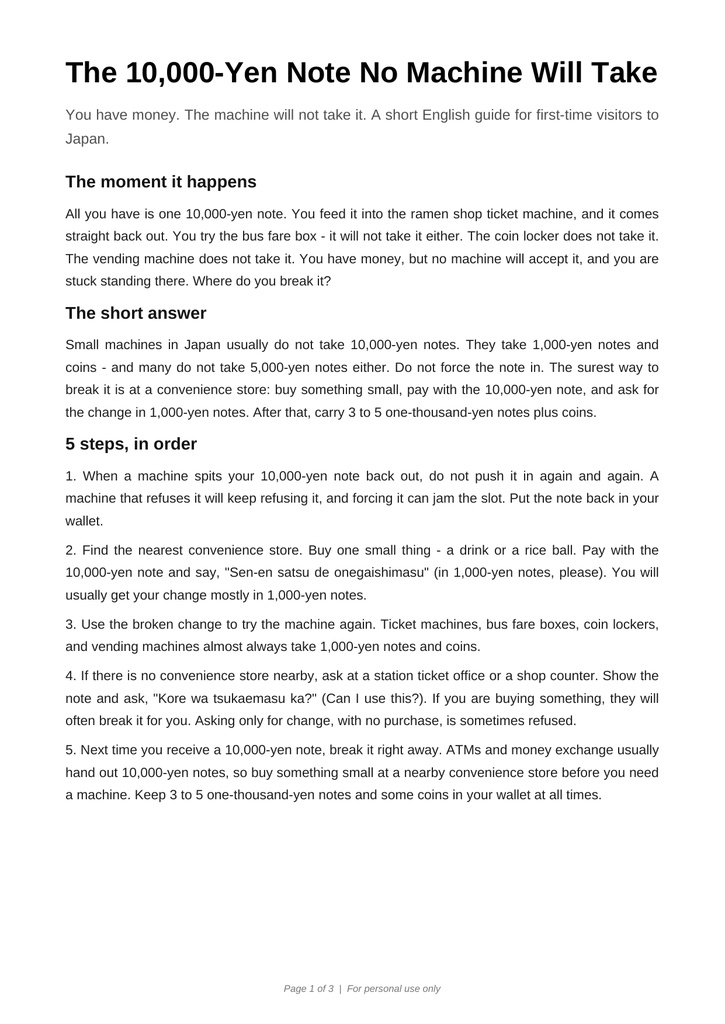

You have money — but the ramen ticket machine spits your ¥10,000 note back out, the bus fare box will not take it, and the coin locker will not take it either. This short English guide explains why small machines in Japan refuse big notes, and how to break a ¥10,000 note at a convenience store so you can use ticket machines, buses, lockers, and vending machines. No Japanese needed — just the order of the steps, a checklist, and the few words that help. What's inside: The 5 steps, in order: stop forcing the note into the machine, buy something small at a convenience store and ask for change in ¥1,000 notes, use the broken change at the machine, ask at a station office or shop counter if there is no store nearby, and break the next big note as soon as you get one. A printable checklist to use when a machine refuses your note, so you do not stand stuck at a ticket machine or a locker. The words that help — "sen-en satsu de onegaishimasu", "kore wa tsukaemasu ka?", "kuzushite mo ii desu ka?", and "otsuri wa arimasu ka?" — with plain-English meanings and how to say them. How it works here — why ticket machines, bus fare boxes, lockers, and vending machines hold only a limited amount of change, and why ¥1,000 notes and coins are the easiest money. The common mistakes first-timers make — feeding the note in again and again, trusting a ¥5,000 note, asking a big shop for change with no purchase, and discovering on the bus or at a locker that they have only a big note — and what to do instead if you are unsure. This is a practical walkthrough for one question: what to do when a machine will not take your ¥10,000 note. It does not cover how much cash to carry for one day — that has its own guide (note 14, "Cash Only in Japan"). Machines differ — check the sign on the machine. No result is guaranteed. File: 3-page English PDF. For personal use only; do not redistribute or resell.